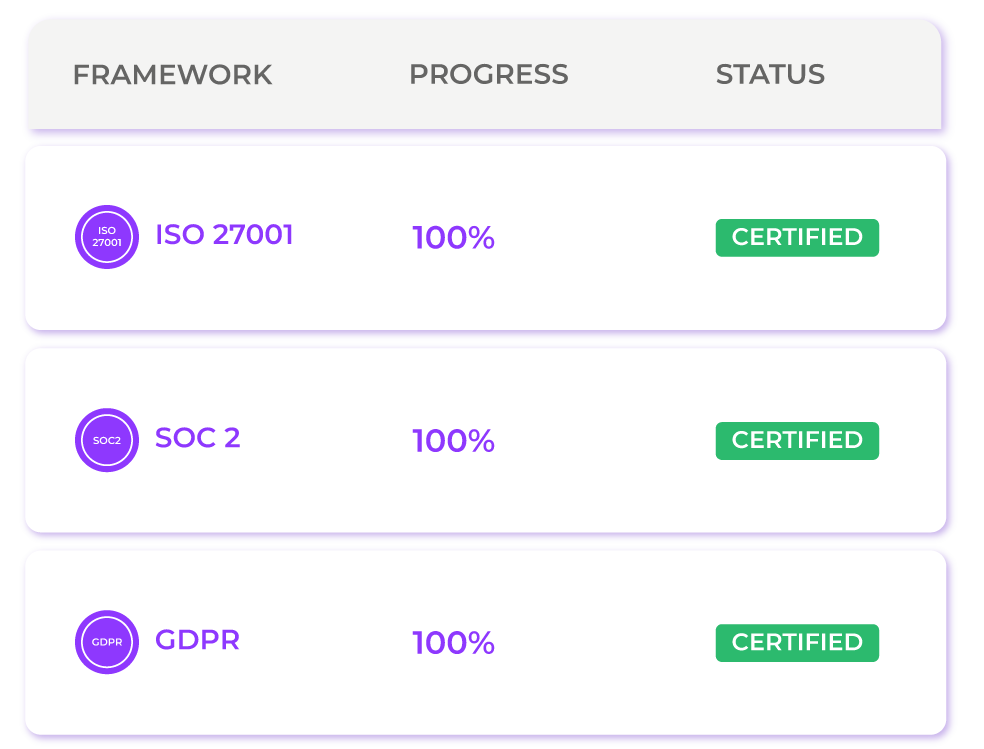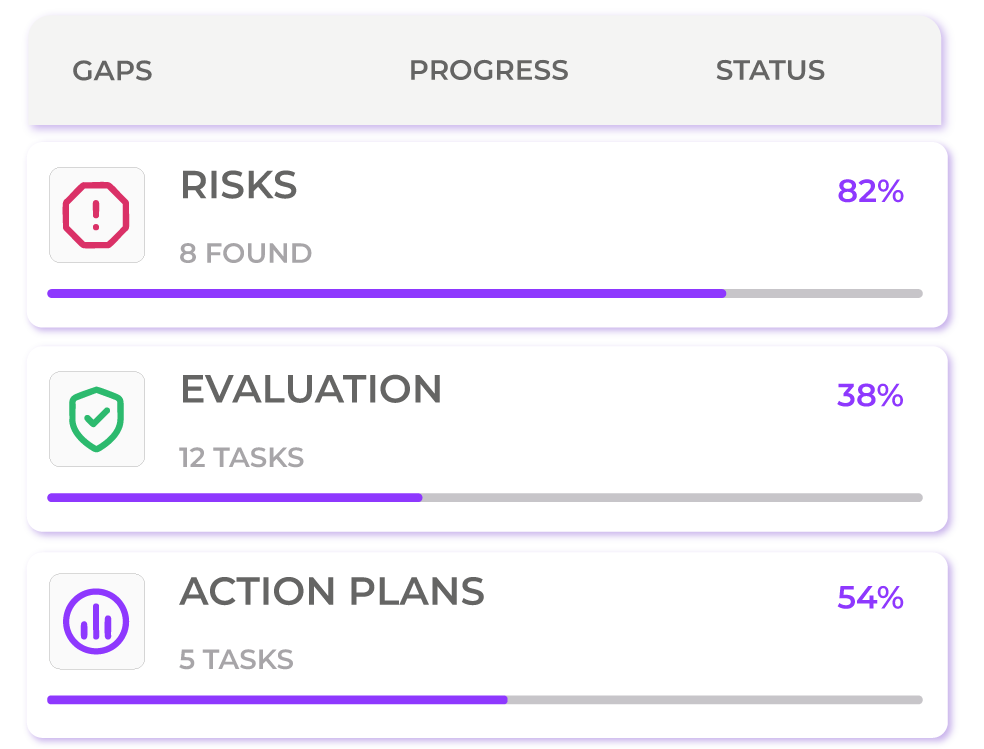
Expert Guidance. Effortless Compliance. Faster Results.

Expert-led compliance for SOC 2, ISO 27001, HIPAA, PCI DSS, ISO 9001, NIST, and more. We handle the complexity so you can focus on growth.

20k+
Satisfied Customers
Outer Item 1
Outer Item 2
Outer Item 3
Middle Item 1
Middle Item 2
Middle Item 3
Middle Item 4
Inner Item 1
Inner Item 2

Trusted by 4,000+ companies

Our Services

AXIPRO
Your End-to-End Partner

From gap analysis to certification to ongoing audits.
We handle the full compliance lifecycle so you stay focused on your customers.

Compliance as a Service

We build, implement, and manage tailored compliance frameworks

Drata Services

Axipro + Drata: Automated Security Compliance

Internal Audit

Strengthen your controls, surfaces hidden risks, and turn compliance into a competitive advantage

Penetration Testing

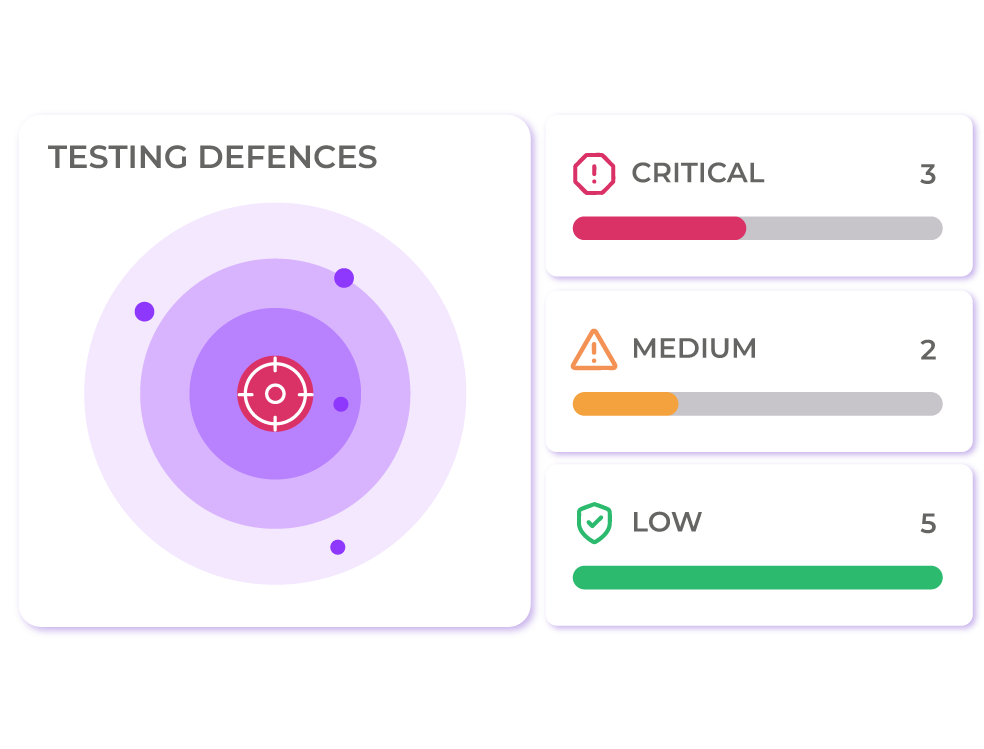
Vulnerability assessment and real-world penetration testing to expose exploitable risk, satisfy certification requirements, and strengthen your defenses.

Certification

15+ globally recognized certifications. From ISO and SOC 2 to HIPAA, GDPR, and FedRAMP, turning compliance into market credibility and operational excellence.

Gap Analysis

Benchmark your current state against where you need to be,delivering a prioritized, actionable roadmap

Our Services

G2 Clients Trust AxiPro

Trusted by clients on G2, Axipro stands out for real support, clear communication, and fast results. Our clients’ stories show how we simplify compliance and build lasting trust through genuine partnerships.

Axipro was instrumental in helping us reach our compliance goals. They simplified the entire process and made it far easier for us to stay organized and confident. They are responsive, knowledgeable, and make compliance feel manageable. 
– CEO, Noon AI

100%

Certification Success Rate

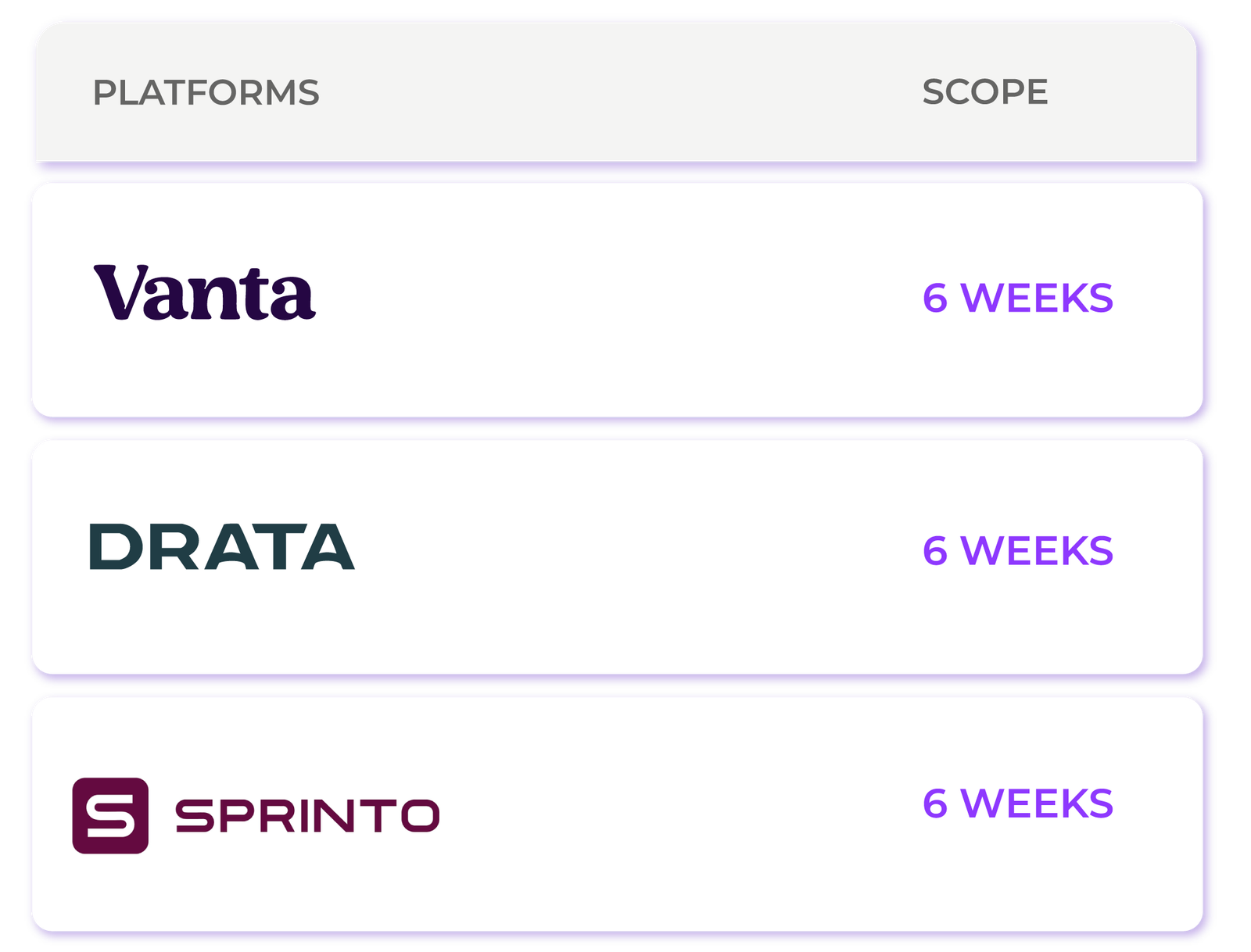
6 Weeks

Average Time to Certification

100M$+

Revenue Unlocked to Our Customers

Testimonials

What Our Customers Say

Why AXIPRO

15+ Years. 100+ Certifications. Zero Failed Audits.

We don’t just guide you to compliance, we guarantee you get there. Axipro combines deep auditing expertise with hands-on support to help you achieve certification faster and maintain it effortlessly.

100% Audit Success Rate

15+ years of consulting experience. Internationally certified auditors. Every client we've prepared has passed their certification audit on the first attempt.

100% Audit Success Rate

15+ years of consulting experience. Internationally certified auditors. Every client we've prepared has passed their certification audit on the first attempt.

100% Audit Success Rate

15+ years of consulting experience. Internationally certified auditors. Every client we've prepared has passed their certification audit on the first attempt.

Partnership

Partnering with Top Industry Experts

From framework implementation to certification, your success is our mission. Axipro provides everything your organization needs to manage risk and scale securely.

Why AXIPRO

The Certified Experts Behind Your Compliance Success

Behind Axipro’s perfect audit track record is a team of compliance professionals who genuinely love solving complex problems and who refuse to let clients fail.

Book a call to meet them today.

Ali Hayat

CEO

Ikponke Surname

Principal Advisor

Vanessa Babicz

Head of Customer Success

Marian Florentino

SOC 2 Advisor

Abeera Zainab

GRC Manager

Shumaila Hirani

GRC Manager

Why it matters

The Axipro Advantage

Traditional Approach

Model

Blog Highlights

Fresh & Featured

Axipro, the cybersecurity and compliance consulting firm, and Kertos, the European compliance automation platform, and  have entered a strategic partnership that combines software automation with hands-on implementation support for organisations navigating Europe’s expanding regulatory regime. The agreement, effective April 1, 2026, names Axipro as an implementation partner for Kertos. Customers can now buy the Kertos platform through Axipro alongside consulting, implementation support, and broader compliance service packages spanning frameworks including GDPR, NIS2, DORA, the EU AI Act, ISO 27001, and SOC 2. The partnership lands as European companies face mounting regulatory pressure. The NIS2 Directive pulled around 28,700 additional companies into scope when it replaced its predecessor in October 2024. DORA became fully applicable in January 2025, binding around 22,000 EU financial entities to a single ICT risk management framework with penalties of up to 2% of global turnover. The EU AI Act adds another layer, with compliance costs for SMEs running between €50,000 and €500,000 per organisation depending on use case. What the partnership delivers Under the agreement, Axipro sells, implements, and operates Kertos for customers as part of integrated service packages. The same partner that scopes the gap assessment, defines the control framework, and runs the implementation also configures and operates the platform that holds the evidence. Engagements no longer hand off between separate vendors. For Kertos, the deal gives the platform deeper exposure to how compliance programmes run inside operating businesses, feeding back into product development. For Axipro, which already supports companies across more than 20 frameworks with services spanning penetration testing, internal audit, and end-to-end certification support, Kertos extends its offering with continuous evidence collection, control management, vendor management, and automated audit preparation. “Our ambition at Kertos is to build the leading compliance automation platform in the market, one that doesn’t just simplify compliance but fundamentally redefines how companies achieve and maintain it,” said Dr. Kilian Schmidt, CEO of Kertos. “Strategic partnerships like the one with Axipro are a key part of that journey. By working closely with experienced compliance experts, we gain invaluable real-world insights that directly shape and accelerate our product development.” Free migration to Kertos through Axipro As part of the partnership, Axipro is offering free migration to Kertos for companies currently using another compliance or GRC platform. The migration covers transferring existing controls, evidence, policies, and vendor records into Kertos, with Axipro consultants handling the rebuild of framework mappings for ISO 27001, SOC 2, GDPR, NIS2, and other applicable standards. The aim is to remove the cost and disruption that typically deters companies from switching platforms mid-program, even when their existing tooling no longer fits their regulatory scope.   DACH region as the starting point Germany consistently leads European GRC adoption and accounts for the largest share of the region’s GRC platform market. It is also where regulatory pressure is sharpest right now, with the Federal Office for Information Security actively building out supervisory capacity ahead of the April 2026 NIS2 registration deadline for essential and important entities. “Compliance is only as strong as the tools and partners behind it,” said Ali Hayat, CEO of Axipro. “Our partnership with Kertos gives our clients in the DACH region access to a powerful data privacy and compliance platform, backed by Axipro’s hands-on expertise. Together, we make achieving and maintaining compliance seamless, faster, and more predictable for the businesses that need it most.” Both companies framed the agreement as a foundation for deeper collaboration as customer needs and regulatory requirements continue to evolve. About Axipro Axipro is a cybersecurity and compliance consulting firm helping high-growth companies achieve and maintain regulatory certifications across more than 20 frameworks including SOC 2, ISO 27001, GDPR, and NIST. Services span penetration testing, internal audit, and end-to-end support for companies pursuing first-time certification or maintaining existing ones. Axipro has offices in the UK, the USA, and Bahrain. About Kertos Kertos is a compliance automation platform that helps companies operating in Europe meet and maintain compliance requirements for frameworks including ISO 27001, SOC 2, GDPR, and NIS2. By automating evidence collection, control management, vendor management, and audit preparation, Kertos enables organisations to build and maintain robust information security and data protection programmes without the manual overhead of traditional approaches. Read the full press release here

ISO 14001:2026 was published on 15 April 2026. Over 600,000 organizations in more than 180 countries are currently certified to the previous edition, and all of them have until approximately May 2029 to transition. The revision is not a rebuild, but it is not cosmetic either. It sharpens several requirements that were inconsistently applied under the 2015 standard, introduces a formally new clause on change management, and embeds climate change, biodiversity, and lifecycle thinking more directly into the Environmental Management System (EMS) framework. This article explains what has changed, what has not, and what certified organizations need to do next. What Is ISO 14001 and Why Is It Being Updated? A Brief Overview of ISO 14001 ISO 14001 is the internationally recognized standard for Environmental Management Systems (EMS). Published by the International Organization for Standardization (ISO), it gives organizations a structured framework for managing environmental impacts, meeting legal obligations, and pursuing continual improvement in environmental performance. The standard applies to organizations of any size, in any sector, anywhere in the world, and more than one million sites globally are currently certified against it. Its value lies not in prescribing specific environmental outcomes, but in building the management system infrastructure that makes consistent, improving performance possible. Whether an organization is a manufacturer managing chemical discharge or a logistics provider tracking fuel consumption, ISO 14001 provides the same underlying framework for setting objectives, measuring performance, and driving improvement. Why ISO 14001:2015 Is Being Revised The 2015 version replaced ISO 14001:2004 and introduced several significant advances: risk-based thinking, a stronger link to organizational strategy, and the Harmonized Structure that aligned ISO 14001 with ISO 9001 and ISO 45001. It was a substantial step forward. But the environment it was designed for has changed. Climate change is now a core business risk, not a future projection. Biodiversity loss is accelerating. ESG reporting obligations have multiplied. Investors and regulators expect documented evidence of environmental performance, not just policy statements. The 2015 edition left too much room for organizations to treat climate and biodiversity as optional considerations within context analysis. The 2026 revision corrects that deliberately.   ISO 14001:2015 vs ISO 14001:2026: Overview of Key Differences What Has Changed and What Has Stayed the Same The core architecture of ISO 14001 is unchanged. The standard still follows the Plan-Do-Check-Act (PDCA) cycle and retains the Harmonized Structure it shares with ISO 9001, ISO 45001, ISO 50001, and other major management system standards. The ten-clause framework remains intact. What has changed is the specificity and accountability required within that framework. Environmental conditions must now be explicitly identified and named in context analysis. Change management is now a formal, auditable requirement rather than an implied expectation. Supply chain thinking is more directly embedded into operational controls. Internal audits must now have defined objectives, not just scope and criteria. The table below summarizes the most significant differences between the two editions. Area ISO 14001:2015 ISO 14001:2026 Climate change Not explicitly required (added via 2024 amendment) Formally integrated; required across multiple clauses Biodiversity Implied; not named Explicitly required in context analysis Change management No standalone clause New standalone Clause 6.3 Risks and opportunities Within Clause 6.1 New standalone Clause 6.1.4 Supply chain scope “Outsourced processes” “Externally provided processes, products and services” Internal audit Defined scope and criteria Defined scope, criteria, and objectives Clause 10.1 Standalone continual improvement clause Integrated into Clauses 10.2 and 10.3 What the ISO 14001:2026 Revision Is, and Is Not ISO 14001:2026 is not a new standard. It does not introduce a fundamentally different approach to environmental management. Organizations with a mature, well-run ISO 14001:2015 EMS will not be starting from scratch. What the revision is: a targeted update that addresses gaps and ambiguities that accumulated since 2015. It makes previously optional considerations mandatory, adds structural clarity where the 2015 edition was ambiguous, and aligns the standard more closely with how environmental management intersects with modern business risk, ESG reporting, and supply chain accountability. Organizations that applied the 2015 standard in a minimal or box-ticking way will face more substantial transition work. Organizations that ran a genuine, actively managed EMS will find most of what is required already in place, with focused updates needed in a handful of areas. Clause-by-Clause Comparison: ISO 14001:2015 vs ISO 14001:2026 Clause 4: Context of the Organization In ISO 14001:2015, Clause 4.1 required organizations to identify external and internal issues relevant to their EMS. Climate change was a possible consideration, but not a named one. The 2026 revision changes this directly. ISO 14001:2026 now explicitly names four categories of environmental condition that must be assessed when determining organizational context: climate change, pollution levels, biodiversity and ecosystem health, and the availability of natural resources. These are not suggestions, they place these issues squarely on the required agenda for every certified organization. The practical implication is significant. An organization that previously mapped its context by tracking energy use and waste generation now needs to demonstrate how it has assessed whether biodiversity loss, water scarcity, or local pollution levels are material to its operating environment. If they are, those factors must flow into objectives, risk registers, and operational controls. Clause 4.3, which covers the scope of the EMS, has also been strengthened. Organizations are now expected to define their scope with explicit reference to their authority and ability to exercise control and influence across the full life cycle of their activities, products, and services. The EMS boundary is no longer limited to the physical boundary of the facility. Clause 5: Leadership Top management responsibilities are expanded in the 2026 edition. The 2015 version focused on management roles. The 2026 revision makes clear that leadership must support environmental performance across all relevant functions, including non-management roles. The environmental policy itself has been updated. ISO 14001:2026 expects the policy to include commitment to conserving natural resources and protecting ecosystems, alongside the existing commitments to pollution prevention and continual improvement. This clause often receives less attention during gap analyses than the more structural changes in Clause 6. But

When Abeera Zainab joined Axipro in early 2024, she quickly became more than just part of the delivery team—she became a driving force behind how compliance engagements are executed across the firm.Over the past few years, her role has naturally expanded. What began as hands-on involvement in compliance delivery has evolved into leading complex, multi-framework programs across diverse client environments. Today, Abeera operates at the centre of Axipro’s GRC function—overseeing engagements that span ISO 27001, ISO 27701, SOC 2, PCI DSS, GDPR, HIPAA, ISO 42001, and DORA, often managing multiple frameworks simultaneously within a single scope.   Her strength lies not just in understanding these standards, but in making them work together—bringing structure to complexity and helping organisations move toward audit readiness without unnecessary friction. This approach has translated into tangible results. Abeera has played a key role in maintaining Axipro’s 100% audit success rate across 40+ certified clients, with no failed audits to date, while consistently delivering a high level of client satisfaction.But what clients often highlight most isn’t just the outcome—it’s the experience of working with her. Even in high-pressure situations—tight timelines, evolving scopes, or complex stakeholder environments—Abeera is known for her calm, structured, and transparent approach. She brings clarity where there is uncertainty, keeps engagements on track, and ensures that teams remain aligned from kickoff through to certification.   Her technical depth supports this delivery. Abeera holds the ISO/IEC 27001:2022 Lead Auditor certification (CQI/IRCA), the ISO/IEC 42001:2023 Lead Auditor certification, and the Drata Fundamentals Certification. Combined with over 3+ years of hands-on GRC experience, she brings both credibility and practical insight to every engagement. As GRC Lead, her focus extends beyond individual projects. She takes ownership of delivery quality, contributes to the evolution of Axipro’s advisory methodology, and actively supports the development of the wider team. Her role sits at the intersection of execution and strategy—ensuring that every engagement not only meets compliance requirements but also strengthens the client’s overall security and governance posture. At her core, Abeera’s work is about more than passing audits. It’s about building confidence—within client organisations, within delivery teams, and within the systems that support them.And that’s what makes her a trusted advisor in an increasingly complex compliance landscape.

On April 19, 2026, Vercel confirmed attackers had reached parts of its internal systems. The entry point was an infostealer infection on an employee’s laptop at Context.ai, a third-party AI platform, two months earlier. From that single compromised machine, an attacker moved through Google Workspace OAuth, into a Vercel employee’s account, and then into Vercel environments where customer environment variables were stored. This is the shape of a modern supply-chain breach, and it is worth understanding in detail. What Vercel Has Confirmed Vercel published a short security bulletin on April 19, 2026, stating that unauthorized access had affected a limited subset of customers. The company engaged external incident response experts and notified law enforcement. Hours later, CEO Guillermo Rauch provided the attack chain on X: Context.ai was breached, a Vercel employee’s Google Workspace account was taken over through that breach, and the attacker then pivoted into Vercel’s internal environments. Incident responders from Mandiant were engaged alongside law enforcement, according to BleepingComputer’s reporting on the incident. Rauch stated that Next.js, Turbopack, and Vercel’s open-source projects had been audited and remained safe, a direct response to claims circulating on a cybercrime forum that framed the incident as a potential Next.js supply-chain disaster. All core services, including deployments, the edge network, and the dashboard, continued to operate normally throughout the investigation. In the days following the disclosure, Vercel also rolled out dashboard updates including an environment variable overview page and an improved UI for creating and managing sensitive variables. The number of customers directly contacted has not been published, but Vercel has described the impact as quite limited. Customers not contacted have been told there is no current evidence their credentials or personal data were compromised. The Initial Access: A Context.ai Infostealer Infection According to cybercrime intelligence researchers, the likely origin of the breach was a Lumma infostealer infection on a Context.ai employee’s machine in February 2026, a full two months before Vercel’s public disclosure. Browser artifacts from the compromised device tell a familiar story: the user had been searching for and downloading Roblox auto-farm scripts and game exploit executors, a well-documented vector for Lumma stealer deployment. The stealer would have exfiltrated browser credentials, session cookies, and OAuth tokens. Context.ai is an enterprise AI platform that builds agents on top of a customer’s institutional knowledge. To function, it integrates with Google Workspace and requests deployment-level OAuth scopes. As reported in detail by The Hacker News, once Context.ai’s credentials were in the hands of an attacker, that OAuth integration became a privileged foothold into any organization using the platform. Vercel’s investigation noted that the Context.ai OAuth app compromise potentially affected hundreds of users across many organizations, which makes the Vercel intrusion one downstream consequence of a broader supply-chain incident rather than a self-contained breach. The attacker used the compromised integration to take over a Vercel employee’s Google Workspace account. From there, they pivoted into Vercel’s environment and began enumerating environment variables. Vercel offers customers the option to mark environment variables as sensitive, which encrypts them at rest and blocks them from appearing in the dashboard UI. Variables not marked sensitive were readable, and the attacker used that enumeration to extend access further. Who Was Affected and What Was Accessed Confirmed impact is narrower than the headlines suggest. Vercel has stated that customer environment variables marked as sensitive remain encrypted at rest and show no evidence of access. The attacker did read environment variables not marked sensitive, and used those values for further escalation. Secondary reporting indicates that Vercel’s Linear and GitHub integrations bore the brunt of the attack. The attacker demonstrated detailed knowledge of Vercel’s internal systems and moved with high operational velocity, behavior that led Vercel to classify them as highly sophisticated. Whether any customer-owned repositories were accessed through these integrations has not been publicly established. Separately, a threat actor using the ShinyHunters moniker listed what they described as Vercel internal data on BreachForums for USD 2 million, claiming to offer employee accounts, deployment access, source code, database content, GitHub tokens, and npm tokens. The same actor separately communicated a USD 2 million ransom demand via Telegram. Vercel has not confirmed any of these specifics, and Rauch’s public rebuttal focused on the claim that Next.js and related OSS release paths were compromised, which Vercel says they are not. Adding a further layer of doubt, members of the actual ShinyHunters group denied involvement when contacted by BleepingComputer, suggesting the listing may be a copycat or lone-actor operation trading on the group’s reputation. Important: Treat the ShinyHunters listing as plausible but unverified. Plan your remediation against the confirmed scope, which is already broad enough to justify rotating Vercel-connected secrets, but do not quote forum claims to regulators, customers, or auditors as established fact. Indicators of Compromise Vercel published an OAuth application identifier tied to the Context.ai integration that Google Workspace administrators should search for in their own tenant: 110671459871-30f1spbu0hptbs60cb4vsmv79i7bbvqj.apps.googleusercontent.com If that client ID appears in your Google Workspace OAuth app inventory, a Context.ai integration exists or existed within your environment. The presence of the integration is not proof your tenant was accessed, but it moves you into the population that needs closer triage. Review the OAuth grant scopes, any activity from the associated service account, and the audit logs for any user who authorized the application. Vercel has also contacted affected customers individually. If you have not received direct outreach, Vercel’s public position is that there is no present evidence your Vercel credentials were compromised. What Vercel Customers Should Do Now Rotate all non-sensitive environment variables across every Vercel project. Anything that is a secret — API keys, database credentials, signing keys, webhook secrets, third-party tokens — should be stored using the sensitive environment variable feature going forward. Rotate any such value that was stored as non-sensitive before April 19, 2026, on the assumption it may have been read. Audit your Vercel activity logs for the period of April 17 through 19, 2026. Unexpected logins, environment variable reads, integration authorizations, or administrative actions during

A new version of the world’s most widely adopted quality management standard is on the way. The Draft International Standard (ISO/DIS 9001) was released on 27 August 2025, and ISO member bodies voted to approve it in December 2025. Final publication is targeted for September 2026, with a three-year transition window expected to follow. Over 1.3 million organizations worldwide currently hold ISO 9001 certification. For every one of them, understanding what is changing, and what is not, matters. This guide covers the confirmed changes in the DIS, the full revision timeline, what the update means for currently certified organizations, and how to plan your transition. Whether you are managing an existing Quality Management System (QMS) or considering certification for the first time, this is what you need to know. What Is ISO 9001:2026? ISO 9001 is the international standard that defines requirements for a Quality Management System. Published by the International Organization for Standardization (ISO), it provides a framework organizations can use to consistently deliver products and services that meet customer and regulatory requirements, and to drive continual improvement. Certification to ISO 9001 is recognized in virtually every industry and country worldwide. ISO 9001:2026 is the sixth edition of the standard. It succeeds ISO 9001:2015 and is being developed by ISO/TC 176/SC 2, the technical subcommittee responsible for quality management system standards. The revision is being drafted by Working Group 29 (WG 29), a body of international experts convened specifically for this purpose. Why Is ISO 9001:2015 Being Revised? ISO standards undergo a formal review cycle every five years. Member bodies assess whether a standard remains relevant, needs updating, or should be discontinued. After a 2020 user survey led the committee to confirm ISO 9001:2015 without revision, a 2023 re-evaluation by a new task force reversed that decision. The conclusion: the world had changed enough since 2015 to warrant an update. Three broad forces are driving the revision. The first is sustainability and climate change. ISO formally amended ISO 9001:2015 in February 2024, requiring organizations to consider climate change as part of their context analysis. That amendment is now being embedded directly into the body of the 2026 standard. The second is digital transformation. Since 2015, AI, IoT, cloud computing, and remote auditing have moved from emerging technologies to standard business practice. The standard needs to reflect that reality. The third is stakeholder expectations. Customers, employees, suppliers, and communities now expect organizations to operate transparently and ethically, not just efficiently. The revision also reflects feedback from quality practitioners globally, who found certain parts of the 2015 standard, particularly the treatment of risks and opportunities, unclear in practice. Pro Tip: EU and UK Customers If your EU or UK customers ask for “an ISAE 3000 report” without specifying the assurance level, clarify upfront. A limited assurance engagement involves materially less testing and a lower fee, but some enterprise buyers will only accept reasonable assurance. Getting alignment early saves weeks of rework. Current Status of the ISO 9001:2026 Revision Draft International Standard (DIS) The DIS was published on 27 August 2025, marking the first time the revised text was available to ISO member bodies for formal review and ballot. The voting period closed on 4 December 2025, with member countries approving the proposal. That approval is a significant milestone: it confirms the standard will be published and locks in the broad direction of the changes, though minor editorial refinements are still possible before final publication. The DIS itself is not freely available, but its content has been widely discussed by national body experts, certification bodies such as DNV and Intertek, and quality management organizations globally. The picture of what is changing is now clear. Final Draft International Standard (FDIS) Following DIS approval, the working group addresses submitted comments before preparing the Final Draft International Standard (FDIS), expected in early 2026. This is typically a near-final text, with only minor adjustments possible at this stage. Once the FDIS is approved, the standard moves directly to publication. ISO 9001:2026 Publication and Transition Timeline Publication is targeted for September 2026. Following publication, the International Accreditation Forum (IAF) will establish the official transition timeline and accreditation requirements for certification bodies. Important: The IAF has not yet formally confirmed the transition period. Based on precedent with previous major revisions, a three-year window is expected. Do not finalize your planning around any specific deadline until the IAF publishes its official transition rules after the standard is published. Key Changes in ISO 9001:2026 The DIS confirms that ISO 9001:2026 is an evolutionary update, not a rebuild. The core requirements in Clauses 4 through 10 have changed modestly. The most significant additions appear in the non-mandatory Annex A, which has been substantially expanded to provide clearer implementation guidance. For organizations currently certified to ISO 9001:2015, the transition burden is expected to be manageable. Ethics and Integrity Within Leadership Clause 5.1.1 now explicitly requires top management to promote and demonstrate a culture of quality and ethical behavior. Previous editions required leadership commitment to the QMS, but the 2026 version makes quality culture and ethical conduct formal leadership responsibilities,  not just implied expectations. Clause 7.3 adds a corresponding requirement at the workforce level: employees must be aware of what quality culture and ethical behavior mean in their context. This pairs leadership obligation with organizational awareness, creating accountability at both ends of the organization. Enhanced and Restructured Risk Management Risk-based thinking has been part of ISO 9001 since 2015, but practitioners consistently reported that the standard did not give enough guidance on how to handle risks and opportunities differently. The 2026 revision addresses this directly. Clause 6.1 is restructured into sub-sections: 6.1.2 for actions to address risks, and 6.1.3 for actions to address opportunities. This is not just editorial. The separation forces organizations to treat opportunity management as a distinct planning activity, not simply the positive counterpart to risk. Many organizations with mature QMS processes had already made this distinction informally,  the standard now makes it explicit. Greater Emphasis on Stakeholder Engagement

Axipro has appointed Ikponke Godwin, CISM, as Principal Advisor. She joins from EY and brings a profile that is genuinely rare in this space: deep technical security experience and mature governance expertise, built in parallel rather than one after the other. Ikponke spent over a year at EY as Senior Cybersecurity Consultant for West Africa, advising enterprise clients across security operations, GRC, and digital transformation. Before that, nearly two years at PwC Nigeria as both Associate Cybersecurity Specialist and Penetration Tester, where she worked across vulnerability assessment, framework implementation, and technical risk analysis. Most recently, she completed a secondment at Flutterwave as GRC Analyst, where she led an enterprise gap assessment using NIST CSF 2.0, co-developed a risk-based remediation roadmap, built out risk taxonomies, and used Drata to automate compliance workflows across one of Africa’s most closely-watched fintech platforms. That combination of offensive security work and governance programme delivery is what makes her appointment significant. Many practitioners develop in one direction or the other. Ikponke has done both, and the combination shapes how she approaches client problems: starting with what could actually go wrong, not just what the framework says should be documented.   She holds the Certified Information Security Manager (CISM) designation and has hands-on experience across penetration testing, SIEM operations, third-party risk management, and security policy development. She has also worked as a Cybersecurity Instructor, which speaks to how clearly she can communicate complex topics to teams who are not security specialists. Ikponke on joining Axipro: “What drew me here is the combination of ambition and precision. The firm is growing fast but has not traded rigour for speed. I want to build on that.” As Principal Advisor, Ikponke will work with enterprise and mid-market clients on complex compliance engagements, technical security assessments, and GRC transformation programmes. She is based in Lagos, Nigeria. We’re glad to have her.

FAQ

Frequently Asked Questions

What is Axipro’s core expertise?

Axipro specialises in compliance automation, cybersecurity audits, and certification support for frameworks such as SOC 2, ISO 27001, HIPAA, GDPR, and PCI DSS. We combine automation tools with human expertise to simplify complex compliance processes.

Most organisations achieve compliance within 6–8 weeks using Axipro’s structured accelerator program, which covers documentation, evidence management, and audit preparation.

We work with startups, IT and SaaS firms, financial institutions, healthcare organisations, and manufacturing companies that need continuous compliance management and certification support.

Axipro’s CaaS delivers ongoing monitoring, gap detection, and framework updates. It’s a fully managed solution that keeps your business compliant while reducing internal workload.

We’re certified under ISO/IEC 27001:2022, ensuring your data is managed under the highest standards of information security and privacy.

Yes. Our internal audit experts evaluate your control environment, test compliance readiness, and offer corrective actions to maintain continual improvement.

Absolutely. We handle audit preparation, evidence updates, and documentation to make renewals fast and hassle-free.

Yes, through our Vulnerability Assessment and Penetration Testing (VAPT) services, we identify threats, patch vulnerabilities, and ensure continuous protection.

Our partnerships with leading automation platforms such as Drata combined with our expert consultants, allow us to deliver faster results, lower costs, and unmatched accuracy.

Simply click Get My Compliance Plan, and our team will create a customised compliance roadmap aligned with your industry and business goals.

The Achievement Plan is Axipro’s flagship compliance program — a structured, 6-week path to full certification. Think of it as compliance on autopilot: we combine automated scanning, intelligent document drafting, and expert auditor support to get you from wherever you are today to certified, without the guesswork or open-ended timelines.