
Penetration Testing Services
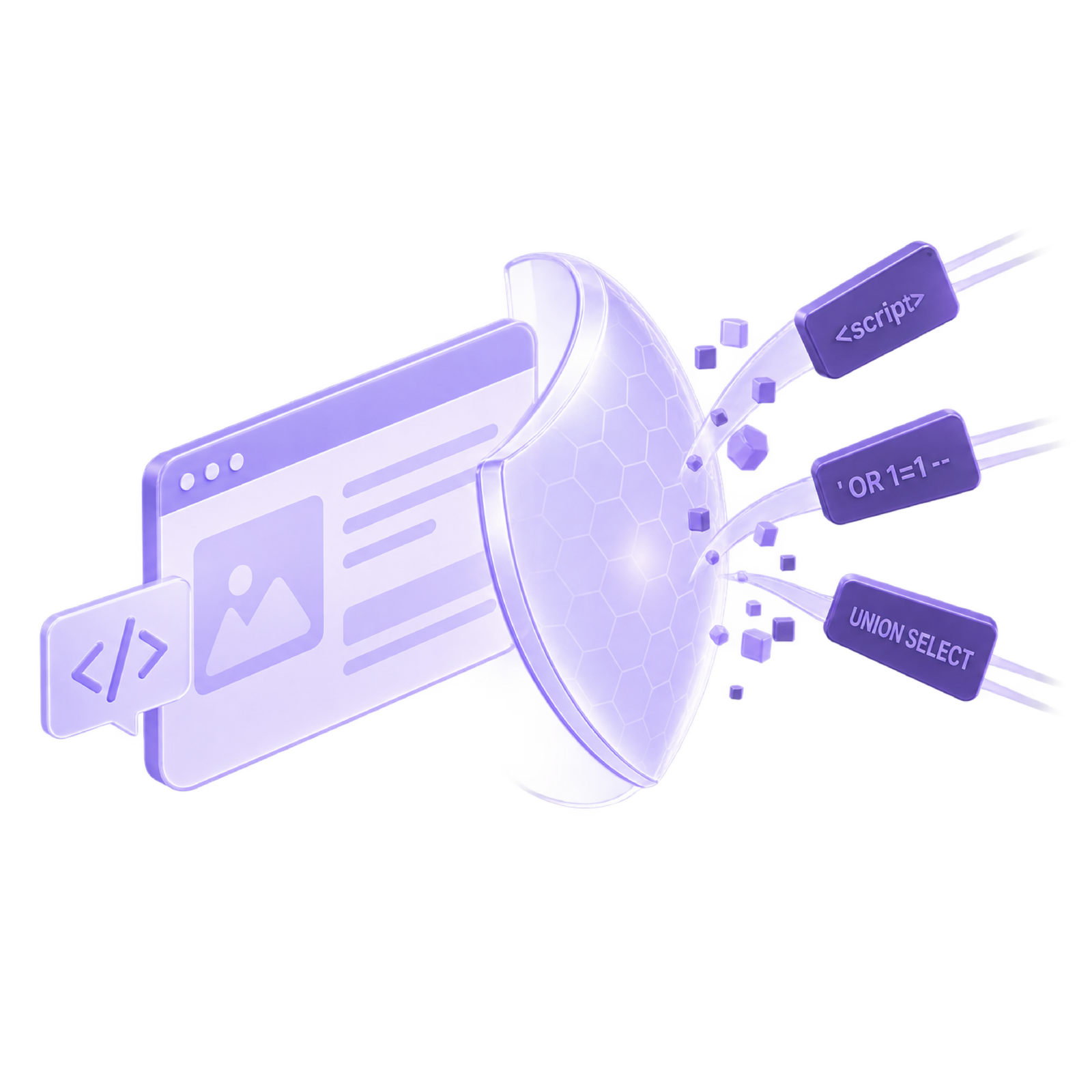
Axipro delivers penetration testing services that go beyond compliance checkboxes. Our vulnerability assessment and penetration testing engagements are structured to satisfy ISO 27001 Annex A (clause 8.8), PCI DSS Requirement 11, SOC 2 CC7.1, and HIPAA technical safeguard controls — while giving your security team a realistic picture of exploitable risk. Serving organisations across Bahrain, the UAE, and the wider GCC region.
- SOC 2
- HIPAA
- ISO 27001
- GDPR
- PCI DSS
Trusted by 300+ companies











Main Objectives of the Penetration Testing Service
Identify Vulnerabilities
Across applications, infrastructure, and exposed services before attackers do.
Improve Security Posture
By understanding how systems behave under real attack conditions, not just theoretical assessments.
Prioritize Remediation
So teams focus on the vulnerabilities that pose genuine business risk, rather than chasing low-impact findings.
Validate Security Controls
To ensure that policies, configurations, and safeguards actually work in practice.
Penetration Testing Services
Real-World Testing, Actionable results,Stronger Security.
5-15 Business Days
Web Application Penetration Testing
Manual testing for the flaws scanners walk past
Broken access control, injection, auth gaps and business-logic abuse, chained into working proof-of-concept exploits
OWASP Top 10
ASVS
PTES
5-15 Business Days
Network Penetration Testing
Prove your perimeter, and what happens once someone is inside it.
Broken access control, injection, auth gaps and business-logic abuse, chained into working proof-of-concept exploits
MITRE ATT&CK
PTES
NIST SP 800-115
5-10 Business Days
API Penetration Testing
The authorisation flaws automated tools systematically miss.
REST, GraphQL and gRPC tested across every role pair, with findings chained into real account takeovers.
OWASP API Top 10
ASVS
PTES
7-14 Business Days
Mobile Application Penetration Testing
iOS and Android, tested end to end alongside the APIs they call.
Static and dynamic testing: reverse engineering, runtime instrumentation, secure storage, transport and pinning.
OWASP MASVS
MSTG
PTES
7-14 Business Days
Cloud Penetration Testing
Manual exploitation across AWS, Azure and GCP, not a config scan.
Assumed-breach testing through the IAM graph: cross-account roles, metadata abuse, container escapes, Kubernetes RBAC.
MITRE ATT&CK
CIS Benchmarks
PTES
1-3 Weeks
AI & LLM Penetration Testing
Security testing for the GenAI, RAG and agent systems you're shipping
Prompt injection, jailbreaks, retrieval poisoning, tool abuse and system-prompt leakage, across the whole stack.
OWASP LLM Top 10
MITRE ATLAS
PTES
9 Steps. One Process. Complete Assurance.
A clear, proven engagement journey from insight to audit-ready results.
Client Insight Phase
Scoping questionnaire
Scope & SOW
2–3 business days
Kickoff Meeting
Methodology walkthrough, credential handover
Testing Execution
1–2 weeks, critical findings alerted immediately
Report Delivery
PDF + machine-readable, audit-ready
Report Review
60–90 min with your technical team
Remediation
Client-driven, we stay on call
Retest & Verification
Every closed finding retested, no surcharge*
Clean Health Report
Final attestation, shareable with auditors
Methodology
How We Test
Every engagement runs to the Penetration Testing Execution Standard. Findings map to the OWASP standard for your scope, MITRE ATT&CK for network and cloud, and the specific controls your auditors will ask about. Scanners help us move fast.
A person validates every finding by hand before it reaches your report.
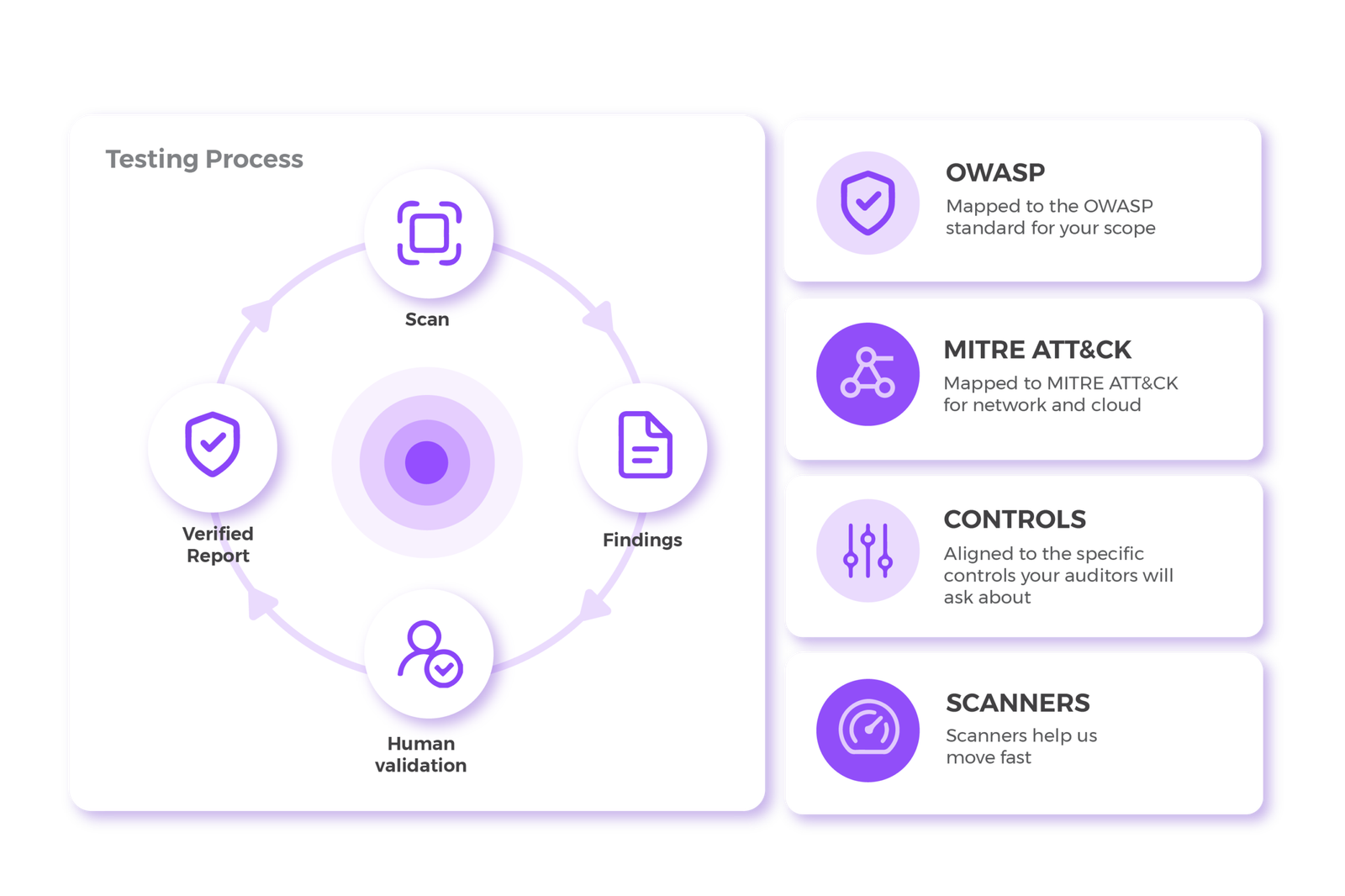
Scanners and manual testing do different jobs
| Comparison Point | Manual penetration test Human-led validation | Automated scan Tool-generated detection |
|---|---|---|
| Business-logic flaws | Yes | No |
| Every finding validated | Yes With proof of concept | No Flags potential issues |
| False positives | Under 1% | High |
| Audit evidence | Accepted for SOC 2, ISO 27001 and PCI DSS 11.4 | Insufficient alone |
| Right cadence | Annually and on major change | Continuously |
If your auditor has ever handed back a scan output and asked for a real penetration test, this table is why.
Our 3 Testing Perspectives
Real-World Testing, Actionable results,Stronger Security.
Black Box
- The External Attacker Simulation
- Zero internal information
- Starting from your public footprint
Best For
- Perimeter and external attack surface
- Validating detection and response

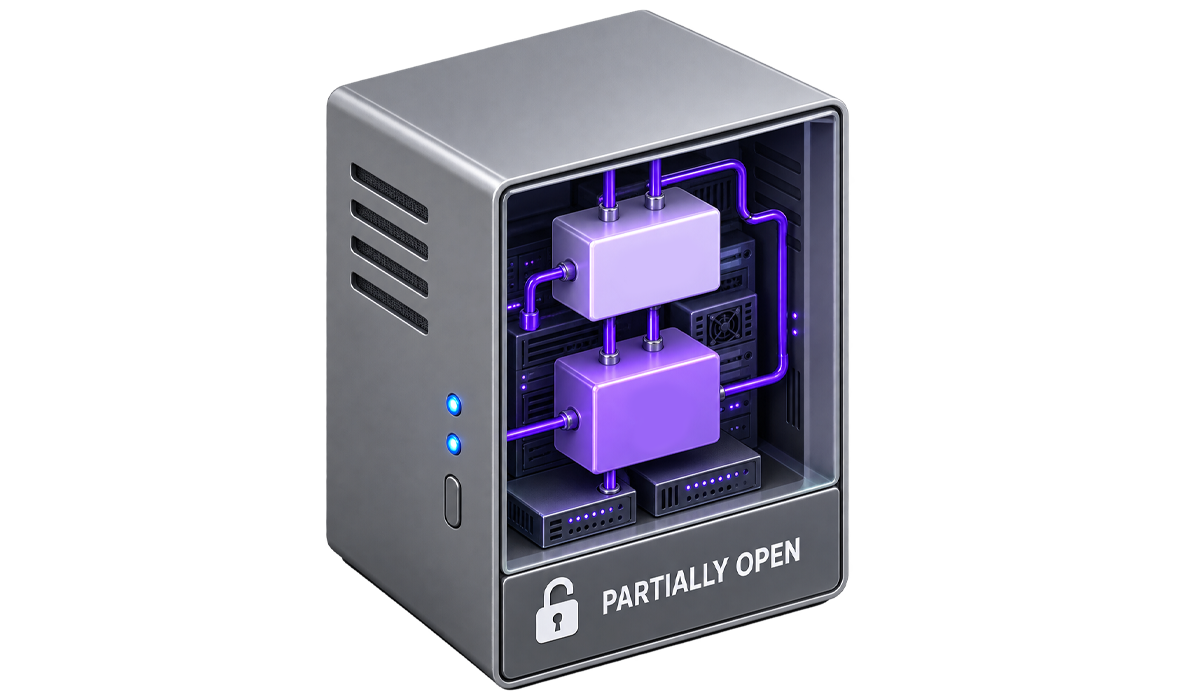
Grey Box
- The compromised user simulation
- A standard account and limited context, like an attacker who phished an employee.
Best For
- Most production environments and SaaS
- Balancing realism with budget and time
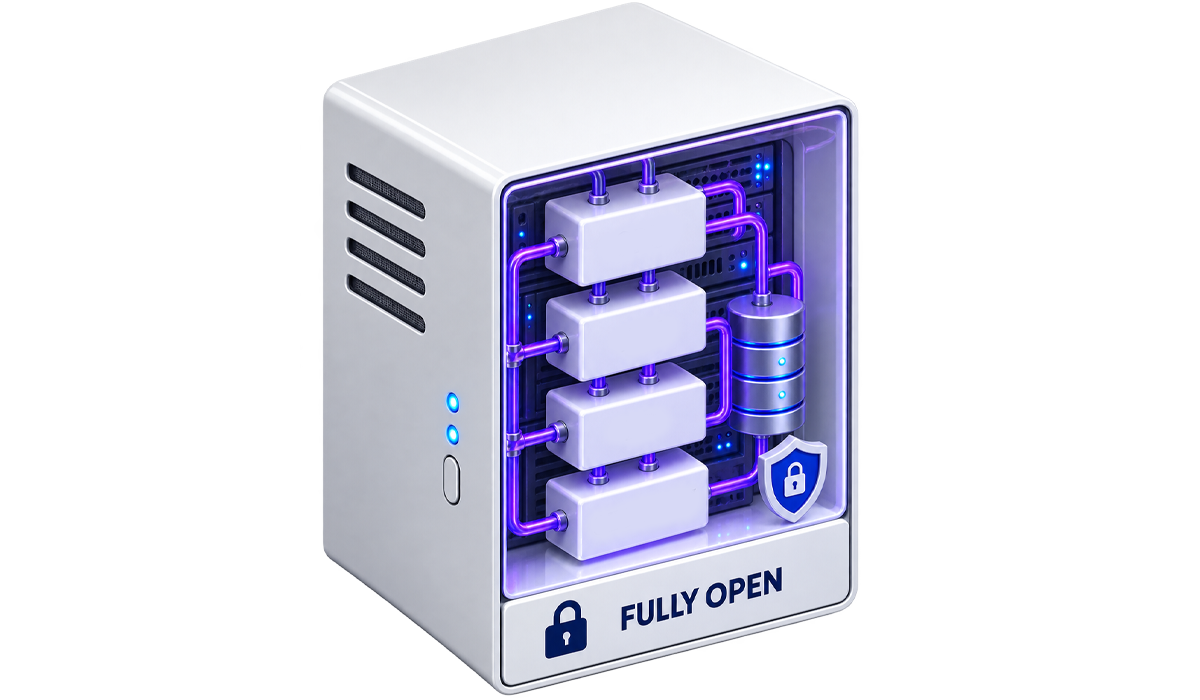
White Box
- The maximum-coverage assessment
- Full information, simulating the worst-case insider scenario.
Best For
- Pre-production and new launches
- High-assurance systems
Compliance Requirements
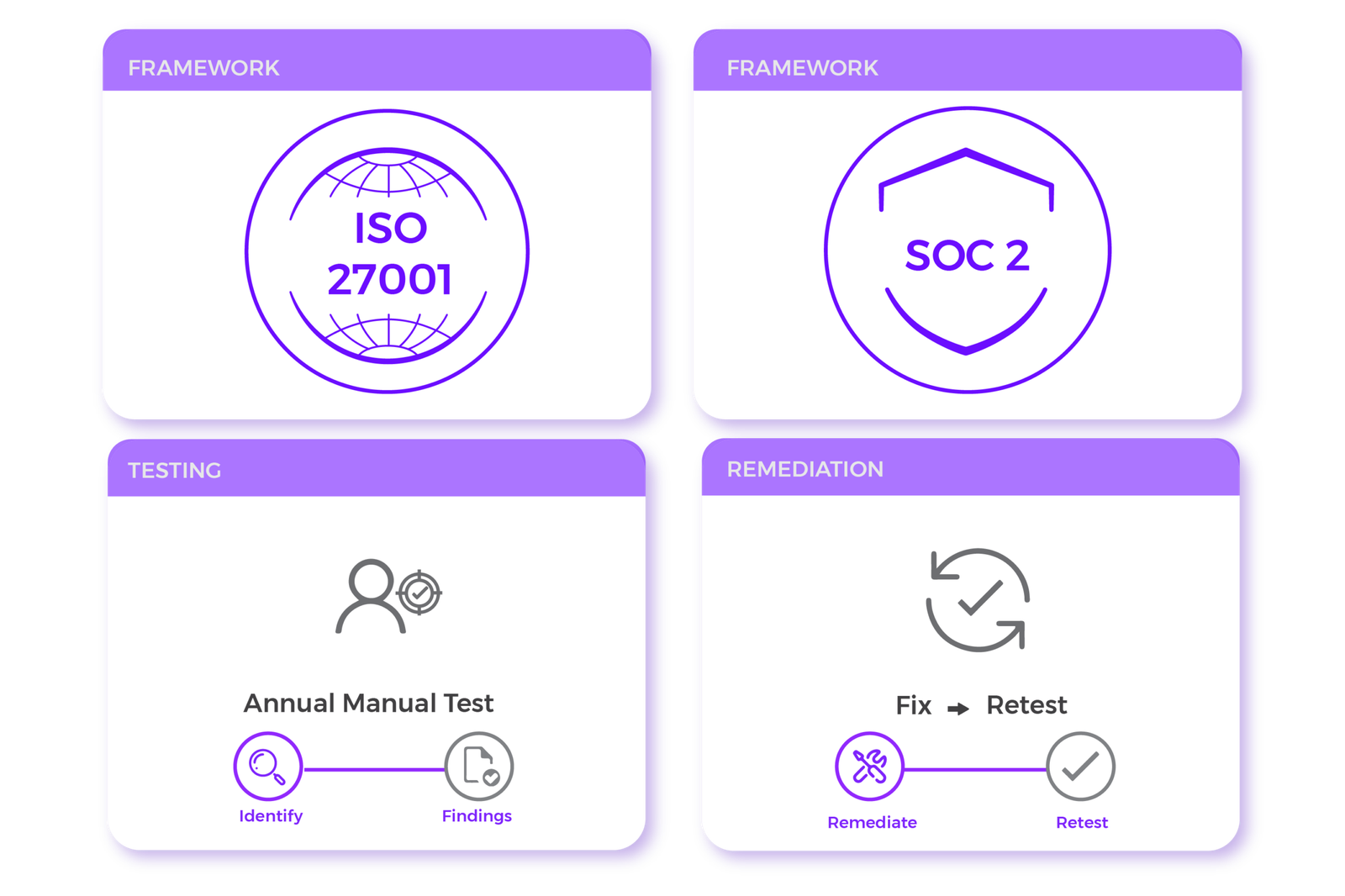
What ISO 27001 and SOC 2 actually require
Neither framework names ‘penetration test’ outright, but both expect one. ISO 27001 control A.8.8 requires you to identify and remediate technical vulnerabilities. SOC 2’s CC4.1 and CC7.1 ask you to prove your controls actually work.
What auditors treat as the gold standard:
An annual manual test by an independent qualified firm, scoped to production, with documented remediation and retest.
Pricing Plans
Penetration Testing Pricing Details
Transparent pricing for every stage of your compliance journey.
Basic
Focused Coverage
- One asset type : Web, Network or Api
- Retest and clean health report included
Starting From
$1,000
Scale
Multi Assets Coverage
- Multiple asset types, multi-framework evidence
- Retest and clean health report included
Starting From
$1,500
Growth
Full Estate Coverage
- Full estate coverage, recurring testing
- Frequent retesting across the year
Starting From
$2,000
Not ready for a quote yet? Start with your scope.
The free Pentest Scope Builder helps you decide what to test, what to leave out and why. Bring it to your scoping call and save a round of back-and-forth.
Your Scope Builder is ready
It opens in a new tab. Choose File → Make a copy to start filling it in.
Resources
Related Resources

A SOC 2 penetration test costs between $1,000 and $30,000 for most companies. A typical SaaS scope, meaning one web application, its API layer, and the cloud infrastructure behind it, usually lands between $2,000 and $20,000. Early-stage startups with a narrow scope can get an auditor-accepted test for $1,000 to $8,000, while enterprises with multiple products and hybrid infrastructure regularly spend $20,000 to $50,000 or more. The spread is wide because “penetration test” covers everything from an automated scan with a cover page to weeks of manual testing by senior engineers. Auditors know the difference, and so do the enterprise customers who asked for your SOC 2 report in the first place. This guide breaks down what drives the price, where the hidden costs sit, and how to buy a test that holds up in fieldwork without overpaying for it. What Is SOC 2 Penetration Testing? A SOC 2 penetration test is a simulated attack on your systems, performed by a qualified security professional, scoped to the environment covered by your SOC 2 report. The tester tries to exploit real weaknesses the way an attacker would: broken access controls, injection flaws, misconfigured cloud services, exposed credentials. The output is a

A Vulnerability Assessment and Penetration Testing report is the final deliverable where weeks of security testing either turn into action or quietly fade away in a company’s digital archive. The testing finds the holes, and the report decides whether anyone fixes them. Get it wrong, and you have an expensive PDF that satisfies an auditor and protects nobody. Get it right, and you have a prioritised plan that tells your team exactly what to fix first and why it matters, saving you a lot of money in avoided security breaches in the long run. This guide covers what a VAPT report is, what belongs in it, how to write one that holds up under scrutiny, and how it ties into the certifications most businesses actually care about. What Is a VAPT Report? VAPT stands for Vulnerability Assessment and Penetration Testing. The report is the document that captures everything the testing uncovered: the weaknesses, how serious each one is, which an attacker could realistically exploit, and what to do about them. The two halves do different jobs. A vulnerability assessment is broad and largely automated. It scans systems, networks, and applications to produce a prioritised list of known weaknesses, without trying

ISO 27001 does not use the words “penetration test” anywhere. And yet, auditors conducting Stage 2 assessments routinely expect to see one. Understanding why that gap exists, and how to close it, is what separates organizations that sail through ISO 27001 certification from those that get caught off-guard. This guide covers what the standard actually says about security testing, which controls drive the expectation for penetration testing, what types of testing are relevant, and how to build a testing programme that genuinely supports your ISMS rather than simply ticking a compliance box. What Is Penetration Testing in the context of ISO 27001? ISO 27001 penetration testing refers to structured, simulated attacks conducted against an organization’s systems, networks, and applications in order to identify exploitable vulnerabilities before real attackers do. In the context of ISO 27001, it serves a specific purpose: providing evidence that the technical controls underpinning your Information Security Management System (ISMS) actually work under real-world conditions. The distinction matters. A vulnerability scan tells you what weaknesses exist whilst a penetration test tells you whether those weaknesses are exploitable, to what degree, and with what consequence. That difference is exactly what auditors are looking for when they ask for

Cyber threats are no longer theoretical. They are automated, persistent, and increasingly aimed at organisations that believe they are “too small to be a target”. Whether you are a SaaS startup, a regulated enterprise, or a growing organisation preparing for ISO 27001 or SOC 2, penetration testing is no longer optional. It is a core security and compliance requirement. At Axipro, penetration testing is designed to do more than find weaknesses. It helps organisations understand their real-world risk, validate security controls, and prioritise remediation in a way that supports audits, certifications, and long-term growth. Main Objectives of Penetration Testing The Axipro penetration testing framework is built around four primary objectives: Identify vulnerabilities across applications, infrastructure, and exposed services before attackers do. Improve security posture by understanding how systems behave under real attack conditions, not just theoretical assessments. Prioritise remediation so teams focus on the vulnerabilities that pose genuine business risk, rather than chasing low-impact findings. Validate security controls to ensure that policies, configurations, and safeguards actually work in practice. Penetration testing is not about producing long reports. It is about producing clarity. Introduction & Methodology Penetration testing at Axipro follows a structured, repeatable methodology that aligns with modern security standards