
The “SSAE 18 vs SOC 2” debate typically surfaces when buyers, vendors, and even internal teams are all talking about the same general assurance problem, but using the wrong labels. A procurement team asks, “Do you have SSAE 18?” A founder says, “We’re going for SSAE 18 certification.” A customer security team asks for an “SSAE 18 SOC 2 report.” Everyone is circling the same planet, but not always landing on the right terminology. SSAE 18 and SOC 2 are not competing things. They are related, but they are not interchangeable. The AICPA defines SOC 2 as an examination and report on controls at a service organization relevant to security, availability, processing integrity, confidentiality, or privacy. SSAE 18, by contrast, is the attestation standard framework under which these kinds of engagements are performed. That distinction matters because buyers often ask for the wrong artifact. If you answer the wrong question, you can waste months preparing the wrong report. Quick Answer: SSAE 18 Is a Standard; SOC 2 Is a Report The simplest accurate explanation is this: SSAE 18 is the professional attestation standard; SOC 2 is the report deliverable. The standard tells the auditor how to perform the engagement. The report is what your customers actually read. The AICPA states that SSAE No. 18 was issued as part of its attestation clarity project, which clarified and recodified attestation standards. The same organization also explains that SOC reports are part of the AICPA’s broader SOC suite of services used to communicate controls at service organizations. So when someone says, “We need SSAE 18,” what they usually mean is one of two things: either they want a SOC 1 report for financial-reporting-related controls, or they want a SOC 2 report for security and broader system controls. How SSAE 18 Relates to SOC 1, SOC 2, and SOC 3 SOC 1 addresses controls at a service organization that are relevant to a user entity’s internal control over financial reporting. The AICPA positions SOC 1 specifically for management of user entities and their financial statement auditors. SOC 2 addresses controls relevant to the Trust Services Criteria (TSC): Security, Availability, Processing Integrity, Confidentiality, and Privacy. It is designed for customers and other specified users who need detailed information about system controls. SOC 3 covers the same trust services subject matter as SOC 2, but in a general-use format with less detail, so it can be freely distributed. (Think of it as the marketing-friendly version.) In plain English: SSAE 18 sits underneath the engagement methodology; SOC 1, SOC 2, and SOC 3 are the reporting formats and scopes that come out of it. What Is SSAE 18? SSAE 18 stands for Statement on Standards for Attestation Engagements No. 18. It is an AICPA-issued attestation standard used in examinations, reviews, and agreed-upon procedures for nonissuers. The AICPA describes SSAEs as applicable to the preparation and issuance of attestation reports for nonissuers, and specifically notes that SSAE No. 18 completed the attestation clarity project through clarification and recodification. Who Issues SSAE 18 and Who Performs the Engagement The AICPA Auditing Standards Board (ASB) issues SSAE standards. The actual engagement, however, is performed by an independent CPA firm or service auditor. That division of labor is important. Your company does not “self-issue” SSAE 18. A CPA firm performs an attestation engagement under that standard and then issues the related report. Insider Tip When a buyer asks whether you are “SSAE 18 certified,” they are using market shorthand, not technical language. The better response is: “We have a SOC 2 Type 2 report issued by an independent CPA firm under the applicable attestation standards.” What SSAE 18 Replaced (SSAE 16 / SAS 70 Context) Historically, the service-organization reporting world moved from SAS 70 to SSAE 16, and then to SSAE 18. The AICPA’s clarity and convergence work eliminated the old SAS 70 framing, established the SOC-branded reports, and recodified the underlying attestation standards into SSAE 18. The standard was introduced in 2016 and implemented in 2017 as part of this evolution. (For international context, SSAE 18’s closest equivalent is ISAE 3402, issued by the International Auditing and Assurance Standards Board.) That is why older buyers may still talk in legacy language. They remember SAS 70. Mid-generation buyers remember SSAE 16. Today’s market usually asks for SOC 1 or SOC 2, but sometimes with yesterday’s vocabulary still attached. Which Engagements Fall Under SSAE 18 Within the SOC context, SSAE 18 governs how the practitioner performs examinations that lead to reports such as SOC 1, SOC 2, and SOC 3. The AICPA’s SOC suite overview frames these offerings as assurance reports used to help assess and address outsourcing risk. What Is a SOC 2 Report? A SOC 2 report is an independent attestation report on controls at a service organization relevant to the Trust Services Criteria. The AICPA defines SOC 2 around the five criteria categories: Security, Availability, Processing Integrity, Confidentiality, and Privacy. SOC 2 exists because businesses increasingly outsource critical systems to cloud and SaaS providers, and they want a way to evaluate whether those providers have appropriate controls in place. We’ve written an in-depth guide on what SOC 2 is, which you can read here. What SOC 2 Evaluates (Controls Aligned to Trust Services Criteria) SOC 2 evaluates whether the service organization’s system and controls are suitably designed—and, in a Type 2 engagement, whether they operated effectively over a review period—against the applicable TSC. Security is always part of SOC 2, while Availability, Processing Integrity, Confidentiality, and Privacy are included based on the nature of the service and customer commitments. If you’re unsure which criteria apply to your organization, a gap analysis is a smart first step. SSAE 18 vs SOC 2: Side-by-Side Comparison Category SSAE 18 SOC 2 What it is Attestation standard Report deliverable Issued by AICPA Auditing Standards Board Independent CPA firm (after the engagement) Primary purpose Governs how the engagement is performed Communicates results about controls relevant to TSC Scope Broad attestation framework Security and
Contrary to popular belief, SOC 2 does not mandate a strict list of cryptographic controls. Instead, it evaluates whether an organization has implemented appropriate encryption controls based on risk. That distinction matters: auditors care less about whether you check a specific box and more about whether your encryption strategy effectively protects sensitive data. This guide breaks down how encryption fits into SOC 2 compliance, where auditors look for it, and how to design encryption controls that hold up during a SOC 2 Type I or SOC 2 Type II audit. What “SOC 2 encryption requirements” really means The System and Organization Controls 2 (SOC 2) framework was created by the American Institute of Certified Public Accountants (AICPA) to help service organizations demonstrate that their systems are secure and trustworthy. SOC 2 assessments evaluate controls against the Trust Services Criteria (TSC): Security, Availability, Processing Integrity, Confidentiality, and Privacy. The AICPA’s 2017 Trust Services Criteria (updated with revised points of focus in 2022) is the document auditors reference when evaluating your controls. But here’s the key nuance: SOC 2 is a controls report, not a prescriptive encryption standard. Instead of dictating exact technologies, SOC 2 asks auditors to determine whether controls are appropriately designed and operating effectively to meet the Trust Services Criteria. This means encryption is often expected—especially for sensitive or regulated data—but it’s not universally “required” in every scenario. Scenario Encryption expectation Public marketing website TLS likely required Internal operational logs May depend on risk classification Customer database with PII Encryption almost always expected The goal is to demonstrate that encryption controls align with your data classification and risk management strategy. If you can show auditors that your encryption decisions are deliberate, documented, and proportionate to the risk, you’re in strong shape. If you can’t, even if your encryption is technically sound, expect follow-up questions. How auditors evaluate “appropriate” encryption for your risk profile SOC 2 audits are risk-based. Auditors don’t walk in with a checklist of mandatory algorithms. Instead, they assess whether your encryption posture makes sense given the data you handle. They typically ask questions like: What types of data does the system process? How sensitive is that data? What threats could expose it? What encryption controls mitigate those risks? Organizations that process PII, financial records, or proprietary customer data will be expected to demonstrate stronger encryption controls than a company that only handles non-sensitive internal metrics. Evidence often includes encryption policies, architecture diagrams, key management procedures, configuration evidence from cloud services, and monitoring and audit logs. The point isn’t just having encryption—it’s having evidence that encryption is in place and working as described. If you’re working from a SOC 2 compliance checklist, make encryption evidence a line item, not an afterthought. For a SOC 2 Type I, auditors evaluate control design at a single point in time. They’re asking: “Are these controls designed in a way that should work?” For a SOC 2 Type II, auditors test whether encryption controls operated consistently over time, typically across a 6–12 month period. This is where SOC 2 Type II continuous monitoring becomes essential. It’s one thing to set up encryption correctly on a Tuesday—it’s another to prove it was running properly every day for the last nine months. The goal is to demonstrate that encryption controls align with your data classification and risk management strategy. If you can show auditors that your encryption decisions are deliberate, documented, and proportionate to the risk, you’re in strong shape. If you can’t—even if your encryption is technically sound—expect follow-up questions. Criterion Role of encryption Key focus Security (mandatory) Primary TLS for network communication, secrets protection, key management, access control enforcement Confidentiality Primary Protecting sensitive data at rest (e.g., AES-256, TDE) and in transit Privacy Important Encrypting PII, credentials, and identity documents; works alongside retention and data minimization controls Availability Supporting Encrypted backups, secure recovery data Processing Integrity Supporting Tamper protection during data transmission and processing Security is the only mandatory criterion in every SOC 2 audit, but if you’ve included Confidentiality or Privacy in your scope, encryption becomes a central control,not a supporting one. For organizations weighing SOC 2 against other standards, our comparison of ISO 27001 vs SOC 2 can help clarify the differences. Encryption scope: what auditors will examine Auditors evaluate encryption within the boundaries you define. That means scoping decisions matter as much as the technical implementation. A mature SOC 2 environment classifies data into tiers,public, internal, confidential, and regulated,and applies encryption requirements accordingly. Customer data almost always receives the strictest protections, while internal operational metrics may be risk-based. If you haven’t built a formal data classification policy, expect auditors to flag that gap. Data type Encryption expectation Customer database Mandatory encryption Employee HR records Strong encryption Internal monitoring metrics Risk-based Two scoping pitfalls that auditors flag regularly: production data copied into staging or development environments without encryption (if real data is present, it needs production-grade protections), and unclear cloud shared responsibility. Cloud providers operate under shared responsibility models,infrastructure security may be the provider’s job, but data encryption configuration is almost always yours. Organizations using services like AWS KMS, Azure Key Vault, or Google Cloud KMS must demonstrate what the provider manages, what they manage, and how both are verified. Data in transit and at rest: what you need to encrypt In transit The industry standard is TLS 1.2 or TLS 1.3 for any data crossing a network boundary,external APIs, admin portals, and internal microservices where the risk justifies it. The rule is simple: if sensitive data moves between systems, it should be encrypted. Auditors increasingly ask about internal service-to-service traffic, not just external connections. Organizations using service mesh frameworks or zero-trust models are well positioned here. Don’t overlook remote access (VPNs, bastion hosts, zero-trust gateways), file transfers (SFTP over plain FTP), and certificate lifecycle management,an expired TLS certificate that causes an outage is both an availability problem and evidence that controls aren’t operating effectively. At rest Encryption at rest protects stored data from unauthorized access. The most
SOC 2 compliance can sometimes feel like a needlessly complex Pandora’s box of documentation. But it shouldn’t be. That’s why today, we’ll show you how to easily become compliant with our 12-step SOC 2 compliance checklist.In its simplest form, all the SOC 2 sections point to the same question: Can you prove your controls work? This SOC 2 Compliance Checklist guides you through the process from scoping through audit completion for both SOC 2 Type 1 and Type 2. It is practical, auditor-aligned, and written for teams that want clarity rather than theory. If you want the short version: SOC 2 is not about tools or paperwork. It is about repeatable processes, clear ownership, and evidence that stands up to scrutiny. What is a SOC 2 compliance checklist? A SOC 2 compliance checklist is a structured roadmap that maps your internal controls to the AICPA Trust Services Criteria and prepares your organization for a Type 1 or Type 2 audit. For a full breakdown of SOC 2 requirements, read our detailed SOC 2 guide. How to Use This SOC 2 Compliance Checklist Think of this checklist as a living roadmap, not a one-time document. You should revisit it at four points: before scoping, during readiness, throughout evidence collection, and after the audit for continuous compliance. Type 1 vs. Type 2: Which Checklist Items Change? The core checklist does not change dramatically between Type 1 and Type 2. What changes is time and proof. Type 1 evaluates whether controls are designed correctly at a specific point in time. Type 2 evaluates whether those same controls operated effectively over an observation period, usually 3, 6, or 12 months. This means evidence for Type 2 must show consistency, such as quarterly access reviews, repeated vulnerability scans, and incident response tests that actually occurred. Who Owns Each Workstream SOC 2 is cross-functional by design. Security may lead, but it cannot succeed alone. Engineering typically owns secure SDLC, change management, and logging. IT owns IAM, endpoints, and device management. Legal and HR contribute policies, onboarding controls, and training. GRC or compliance coordinates risk assessment, evidence, and auditor communication. The fastest SOC 2 projects have named control owners with deadlines, not shared responsibility. What “Audit-Ready” Really Means Being audit-ready does not mean “we think we are secure.” It means you can produce clear, dated, and traceable evidence that maps directly to the Trust Services Criteria. Auditors test design, then operation. They expect policies, tickets, screenshots, logs, and approvals. They also expect alignment. If your policy says quarterly, your evidence cannot show annual. The AICPA provides the underlying standard, supported by SSAE 18 and AT-C 205. Pre-Checklist: Confirm You Actually Need SOC 2 Not every company needs SOC 2 immediately. If your customers are SMBs, you may see lighter requirements. If you sell to enterprises, SOC 2 often becomes non-negotiable. Security questionnaires are the strongest signal. When prospects ask about penetration testing, access reviews, and incident response evidence, SOC 2 is usually the cleanest way to respond at scale. Alternatives like ISO 27001, PCI DSS, or HIPAA can be valid. But SOC 2 is uniquely customer-facing, especially in North America. ISO 27001 is excellent for global alignment, while SOC 2 maps directly to buyer trust. The 12-Step Checklist Step 1- Define Scope Scoping mistakes cause more SOC 2 delays than any missing control. Your scope must clearly define the services you provide, the systems that support them, and the access controls. Over-scoping increases cost and complexity. Under-scoping leads to auditor pushback. In-scope systems usually include production cloud environments, CI/CD pipelines, support tooling, and identity providers. In-scope people include employees and contractors with access to customer data. Third parties are addressed as Subservice organization, using either the Carve-out method or Inclusive method. Data classification and flows must identify PII, PHI, or payment data, and how it moves through systems. Action Plan for Scoping Define the Service Commitment List In-Scope Systems Identify In-Scope People Document Third Parties Map Data Flows Validate Scope with Leadership Step 2- Select the Trust Services Criteria All SOC 2 reports include Security (Common Criteria). The others are optional but must be justified. Availability focuses on uptime and disaster recovery. Confidentiality focuses on sensitive data protection. Processing Integrity focuses on system accuracy. Privacy applies when personal data obligations are central. Your report must document why each criterion is included or excluded. Auditors look closely at this rationale. Trust Service Criteria Action Plan Confirm Security (Mandatory) Assess Optional Criteria Document Inclusion Rationale Obtain Executive Sign-Off Step 3- Choose the Audit Path and Timeline Most teams benefit from a readiness assessment before audit. This is often referred to as a Readiness assessment or Gap analysis. Type 1 audits can be completed in weeks once controls are ready. Type 2 timelines depend on the observation period. Six months is the most common balance between speed and credibility. Define control owners early and create an evidence calendar. Late evidence is the enemy of clean audits. Audit Path and Timeline Action Plan Conduct Readiness or Gap Assessment Choose Audit Type Set Observation Period (Type 2) Assign Control Owners Build Evidence Calendar Step 4- Pick an Auditor and Define the Engagement Choose a CPA firm with real SOC 2 experience in your industry. Responsiveness matters more than brand name. Confirm standards, testing approach, sampling expectations, and how subservice organizations are treated. The engagement letter should clearly state scope, period, and deliverables. A clear PBC list process avoids confusion later. Action plan for finding an auditor. Shortlist CPA Firms Review Testing Approach Clarify Subservice Treatment Finalize Engagement Letter Request Preliminary PBC List Step 5- Perform a SOC 2 Gap Analysis Map existing controls to the Trust Services Criteria. Missing policies, undocumented processes, and inconsistent evidence usually surface here. Prioritize high-risk gaps first. Document known exceptions and compensating controls honestly. Auditors prefer transparency over perfection. Gap Analysis Action Plan: Map Controls to Criteria Identify Missing Controls Prioritize by Risk Document Compensating Controls Step 6- Build the Policy and Governance
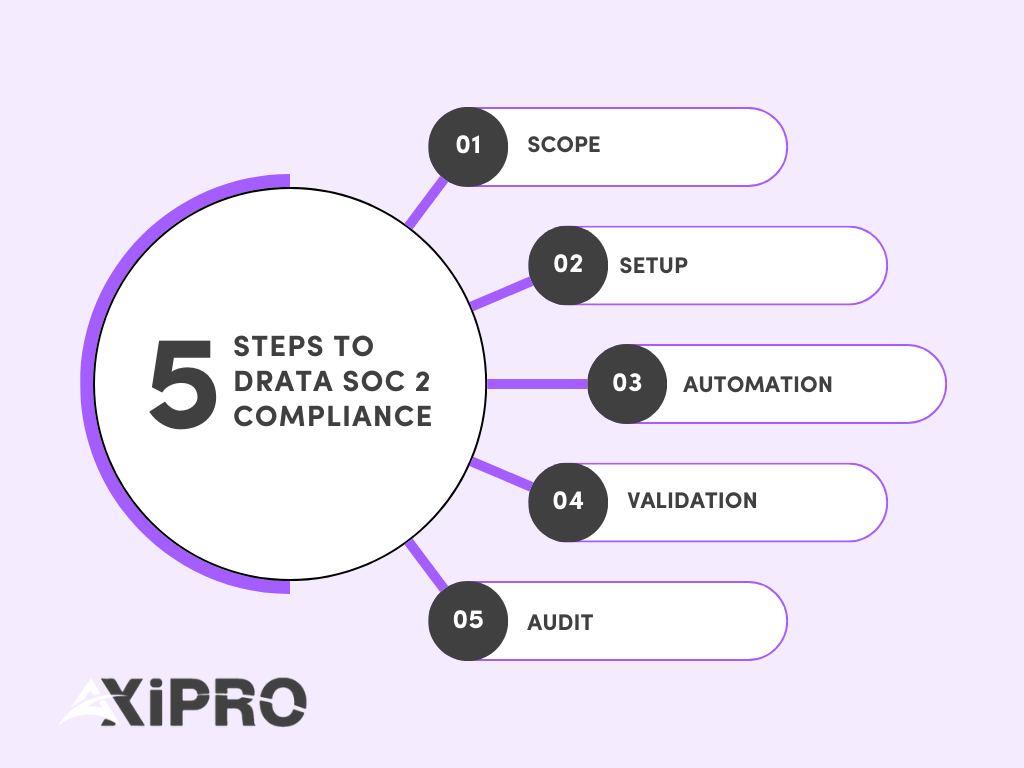
Drata is a powerful tool. It can transform a slow, resource-draining activity into a value-added automated task. But in order for it to work, it needs to be set up properly. This guide explains how SOC 2 actually works inside Drata, what you need before you begin, and how to avoid the most common mistakes that slow teams down. It is written for founders, CISOs, compliance leads, and non-technical executives who want a semi-automated approach to compliance. Drata does not replace your SOC 2 program. It operationalizes it. The platform helps you manage controls, evidence, and monitoring, but decisions, ownership, and execution still matter. A successful Drata SOC 2 project follows a predictable flow: scoping, setup, automation, validation, and audit. Before You Start: What You Need to Run a SOC 2 Project in Drata Before logging into Drata, your organization needs to be aligned. 1- Decide your SOC 2 target: Type 1 vs. Type 2 and realistic timelines SOC 2 comes in two formats defined by the AICPA. SOC 2 Type I evaluates whether controls are designed correctly at a point in time.SOC 2 Type II evaluates whether those controls operate effectively over a period, usually three to twelve months. Report Type What It Evaluates Timeframe SOC 2 Type I Whether controls are designed appropriately Point in time SOC 2 Type II Whether controls operate effectively 3–12 months With Drata, many of our clients reach Type I readiness in 6 to 8 weeks if controls already exist. Type II timelines depend on the observation period, which can range from 3 months to up to a year. If you’re pursuing SOC 2 compliance due to a client’s request, he will till you which type he requires. If you’re proactively seeking SOC 2 compliance, then we recommend going for type 2 compliance. This allows you to cast a wider net of clients. A successful SOC 2 program follows a predictable lifecycle. While tools and timelines vary, the underlying phases are consistent across most organizations. Scoping: Define the system being audited, select Trust Services Criteria, set the audit period, and confirm the auditor. Good scoping reduces downstream complexity dramatically. Setup: Configure Drata, connect integrations, publish policies, and assign control ownership. This phase turns abstract requirements into operational structure. Automation: Enable continuous evidence collection across identity, infrastructure, code, ticketing, and endpoints. Automation replaces manual tracking, but only when integrations reflect reality. Validation: Run a readiness review. Confirm that controls are operating as described, evidence is complete, and timing aligns with the audit window. This is where most hidden risks surface. Audit: Auditors independently test controls and evidence. Clarifications and minor findings are normal. Clear responses and preparation determine how fast this phase moves. Continuous compliance: After the report is issued, controls continue operating. Monitoring, reviews, and periodic reassessment prevent drift and reduce effort in future audit cycles. 2- Select your Trust Services Criteria Every SOC 2 must include the Common Criteria for Security. Additional criteria are optional and must be justified. These include Availability, Confidentiality, Processing Integrity, and Privacy. The choice of additional criteria is driven by the service agreement with the customer, which may require specific criteria, or by the type of business pursuing SOC 2. If you’re a SaaS that handles a large amount of private financial data, it makes sense to pursue the confidentiality criteria, for example. Availability makes sense if you sell uptime guarantees or SLAs. Privacy should only be selected if you are prepared to meet the additional criteria around notice, consent, and data subject rights. 3- Gather prerequisites: Systems, Owners, and Access Drata works best when you already know what is in scope. This includes cloud infrastructure, identity providers, repositories, ticketing tools, and endpoints. You also need named control owners. Automation cannot replace accountability. 4- Choose or confirm an auditor early An external CPA firm ultimately issues the SOC 2 report. Confirm your auditor before proceeding with deep configuration to avoid mismatches in expectations, evidence formats, or control interpretations. Where Axipro Fits in a Drata-Led SOC 2 Program Drata is excellent at operationalizing SOC 2. It centralizes controls, automates evidence collection, and enforces timelines that matter to auditors. What it does not do is make judgment calls, resolve ambiguity, or design controls in context. That work still belongs to the experts. This is where Axipro fits. In practice, Axipro supports Drata-led SOC 2 programs in four critical areas: Scoping discipline Before configuration begins, Axipro helps validate system boundaries, Trust Services Criteria selection, and audit periods. This prevents over-scoping, which is one of the most common reasons SOC 2 projects slow down or fail testing later. Control ownership and execution clarity Drata can track controls, but it cannot assign accountability. Axipro works with teams to ensure every in-scope control has a clear owner, a realistic execution process, and an evidence strategy that will stand up to auditor scrutiny. Readiness validation before auditor access Many SOC 2 delays happen after auditors are invited. Axipro performs structured readiness reviews to catch weak evidence, misaligned controls, and timing gaps before fieldwork begins. This reduces follow-ups, exceptions, and rework. Audit navigation and exception handling During the audit, Axipro helps teams respond to auditor questions, document compensating controls, and resolve findings clearly. This keeps the audit moving and avoids creating long-term issues that resurface in future cycles. Drata provides the operating system. Axipro helps ensure the program running on top of it is coherent, defensible, and sustainable. Step 1: Scope Your SOC 2 Program in Drata Once your prep work is done, it’s time to open Drata and start the real implementation work. Scoping is the first and most important step. It defines what the auditor will test and, just as importantly, what they will ignore. Create the audit container In Drata, scope becomes “real” the moment you create the audit. Navigate to Audit Hub, then select Create Audit. Choose SOC 2 as the framework and define the audit period. This date range matters more than most teams realize. Drata
If your company sells software, handles customer data, or operates in the cloud, chances are you have already been asked for a SOC 2 report. Sometimes by a prospect, sometimes by a procurement team, sometimes by a very persistent security questionnaire that refuses to go away. And if you are early in your compliance journey, that request can feel confusing, intimidating, or even slightly unfair. What exactly is a SOC 2 report? What does it include? How does the process actually work? And do you really need one right now? This article answers those questions clearly, without legal jargon or unnecessary complexity. Whether you are a startup selling internationally or a SaaS company expanding into enterprise deals, this guide will give you the full picture on SOC 2 compliance. What does SOC 2 stand for? SOC 2 stands for System and Organization Controls 2. It is part of a broader family of SOC reports created to help organisations demonstrate how they manage and protect information. In a nutshell, its a voluntary framework that proves that a company stores and manages data in a safe way. The “2” matters because it distinguishes this report from others in the SOC framework: Report Type Primary Focus Typical Audience SOC 1 Controls relevant to financial reporting Auditors, finance teams, regulators SOC 2 Controls related to security, availability, processing integrity, confidentiality, and privacy Customers, partners, procurement teams SOC 3 High-level public summary of SOC 2 controls General public, marketing, prospects When customers ask for “SOC 2,” they are seeking evidence that your internal systems and processes are designed to protect their data consistently and measurably. And this can be evaluated through a SOC 2 report. SOC 2 vs SOC 1 vs SOC 3: what’s the difference? SOC reports serve different purposes, and choosing the wrong one can create unnecessary work. SOC 1 focuses exclusively on controls related to financial reporting. It is primarily relevant for service providers whose systems impact a customer’s financial statements, such as payroll processors or financial platforms. SOC 2 evaluates controls related to security, availability, processing integrity, confidentiality, and privacy. It is the most commonly requested report for SaaS companies, cloud providers, and B2B service organisations because it directly addresses data protection and operational risk. SOC 3 is a high-level, public summary of a SOC 2 report. It contains far less detail and is typically used for marketing or high-level assurance, not for procurement or vendor risk assessments. If customers, partners, or regulators need detailed evidence of how you protect data, SOC 2 is almost always the correct choice. https://www.youtube.com/watch?si=_Qmle4yusN2cMOJT&v=dueT49f5wNA&feature=youtu.be Benefits of SOC 2 Compliance- Why do Companies Pursue Compliance? Companies invest in SOC 2 compliance for the commercial and operational advantages it delivers. But besides that, being able to produce a SOC 2 report will allow to cast a wider net and work with customers that you would otherwise not be able to work with. Some examples: Cloud service providers, SaaS companies, and Data Centers looking to win big enterprise contracts: These businesses are often required to do Vendor Risk Assessment due to regulations such as GDPR, HIPAA, PCI DSS, SOX, and NYDFS. Companies in tightly regulated industries: Finance, healthcare, and technology are typically regulated by norms that required SOC 2 reports and Vendor Risk Assessment. Companies bidding for government contracts: While not always required, some government bodies will ask for an SOC 2 report or ISO 27001 certification to accept bids. SOC 2 reports are becoming widespread since they cascade down: Most SOC 2 compliant businesses will require vendors to produce a SOC 2 report, and not having an SOC 2 report will often make you lose a compliant client. Besides that, the most immediate benefit is trust. A SOC 2 report reduces friction during sales cycles by answering security questions upfront, rather than repeatedly through bespoke questionnaires. So even when its not strictly required, having a SOC 2 report will be beneficial. It also improves internal discipline. Preparing for SOC 2 forces teams to formalise access controls, incident response, change management, and monitoring processes that often exist informally. Finally, SOC 2 can be a growth enabler. Many enterprise buyers will not progress without it. Having a current report keeps deals moving and prevents compliance from becoming a last-minute blocker. A 2023 procurement study published by Wired noted that vendor security reviews are now standard even for contracts under six figures, reflecting how deeply embedded assurance expectations have become. Who typically needs SOC 2 compliance? SOC 2 is most often pursued by organisations that handle customer data on behalf of others, especially where trust and security influence buying decisions. This commonly includes: SaaS and cloud-based software companies Managed service providers, IT, and security firms Data platforms, infrastructure providers, and APIs Companies selling into regulated or enterprise markets Beyond industry, SOC 2 is often triggered by stage and scale. Startups moving upmarket, companies entering enterprise sales cycles, or vendors undergoing formal vendor risk assessments are frequently asked for a SOC 2 report before deals can progress. Even when not explicitly required, SOC 2 often becomes a commercial necessity. Customers increasingly expect structured, independent assurance that security controls are not improvised, but designed, documented, and consistently followed. What is a SOC 2 report? A SOC 2 report is an independent assurance report that evaluates how well an organisation protects customer data. It is issued by a licensed CPA firm and is based on the Trust Services Criteria (TSC) developed by the American Institute of Certified Public Accountants (AICPA). In simple terms, a SOC 2 report answers one core question: Can this company be trusted to handle sensitive information securely and responsibly? Unlike ISO standards, SOC 2 is not a “certification” in the traditional sense. There is no pass or fail badge. Instead, the report documents: Your control environment How controls are designed How they operate over time Any exceptions or gaps identified by the auditor The result is a detailed report that customers and partners use to assess your
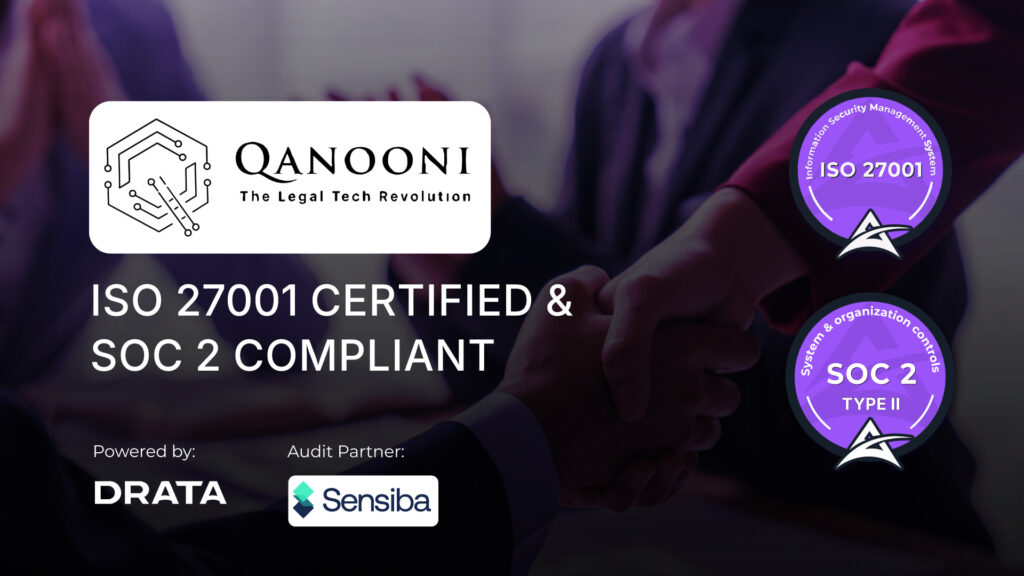
At a Glance In today’s AI-driven sales world, security and trust are as critical as performance. For VidLab7, a fast-growing AI demo automation platform, these values sit at the heart of their innovation. As the company scaled across Europe, it became essential to validate its commitment to information security, data privacy, and customer confidence. To achieve this, VidLab7 pursued ISO 27001 and SOC 2 compliance, two globally recognized standards that demonstrate excellence in governance and data protection. Partnering with Axipro for advisory guidance and Sensiba as the independent auditor, VidLab7 set out to strengthen its compliance foundation and position itself as a trusted provider of AI-powered sales technology. This certification journey wasn’t just about ticking boxes; it was about reinforcing VidLab7’s promise of delivering secure, reliable, and compliant AI solutions to enterprise customers worldwide. About VidLab7 VidLab7 is revolutionizing how businesses engage prospects through AI-driven demo automation. The platform enables companies to automatically convert inbound website visitors into qualified leads and closed revenue, without forms, delays, or additional headcount.Using interactive AI avatars, VidLab7 delivers personalized product pitches, demos, and follow-ups in real time, across 130+ languages. Its technology seamlessly integrates with major CRMs such as Salesforce, HubSpot, and Pipedrive, allowing marketing and sales teams to boost pipeline and conversion rates up to 10x.Behind this innovation lies a deep commitment to security. With customer data flowing through global systems, achieving ISO 27001 and SOC 2 compliance was crucial to ensuring that VidLab7’s infrastructure remained both scalable and secure, empowering businesses to grow with confidence Challenge: Data protection & workflows automation As VidLab7 expanded its customer base and data footprint, maintaining compliance across its complex cloud infrastructure became a pressing priority. The company needed to: Protect client data across multiple regions under strict privacy regulations such as GDPR. Standardize information security practices to support ISO 27001 and SOC 2 requirements. Automate compliance workflows through Drata to reduce manual effort and audit stress. Meet enterprise expectations for transparency and trust in AI-powered automation. Operating at the intersection of AI, SaaS, and data-driven sales, VidLab7 understood that certification would not only validate their systems but also elevate customer trust. The goal was ambitious: achieve ISO 27001 and SOC 2 compliance within six months, without slowing innovation or customer delivery. Solution: Advisory & Audit Partnership For VidLab7, achieving ISO 27001 and SOC 2 compliance required clarity, coordination, and a partner who understood the fast-moving world of AI and SaaS. They turned to Axipro for structured advisory support that would help them prepare efficiently without slowing down innovation. Together, Axipro and VidLab7 mapped a clear roadmap from assessment to audit readiness. The Axipro team guided VidLab7 through every stage, from risk assessments and control alignment to document readiness and awareness sessions, ensuring each process met the standards of ISO 27001 and SOC 2. Using Drata, VidLab7 automated its compliance tracking, simplifying evidence collection and continuous monitoring. This reduced manual work, improved visibility, and kept every department aligned. Throughout the engagement, Sensiba, the independent audit partner, conducted objective evaluations and verified controls under both frameworks. This separation between advisory and audit preserved independence while ensuring transparency and confidence at every step. By the time the audit began, VidLab7’s teams were confident, organized, and fully aligned, ready to showcase the strength of their information security management system (ISMS). In the words of Tomas Smetana,VP Finance & Operations, VidLab7: Axipro went above and beyond during our ISO and SOC certification journeys. Their team demonstrated deep expertise, proactive communication, and absolute reliability at every stage. What could have been a painful compliance process turned into a smooth, structured, and even enjoyable experience thanks to their professionalism and hands-on support. Results: Strengthened Security & Customer Trust After months of preparation, VidLab7 achieved ISO 27001 and SOC 2 compliance, reinforcing its position as a trusted AI sales automation provider in Europe. The results spoke volumes: ISO/IEC 27001:2022 certification and SOC 2 Type I attestation completed under the oversight of Sensiba. A fully operational ISMS that governs all data handling, infrastructure, and personnel processes. Reduced manual workloads thanks to Drata’s automation and Axipro’s streamlined advisory framework. Improved internal awareness of security responsibilities across teams. Enhanced trust from enterprise customers, many of whom prioritize certified vendors for data-sensitive integrations. For VidLab7, the achievement was more than a milestone; it was a signal of maturity and credibility. They could now demonstrate, with confidence, that their AI technology operates with enterprise-grade security and data integrity. Why VidLab7 Chose Axipro When VidLab7 began exploring ISO 27001 and SOC 2 compliance, they sought an advisory partner that could combine structure with speed. The decision to work with Axipro was driven by three key factors: Advisory Expertise: Axipro’s consultants provided step-by-step guidance, helping the VidLab7 team understand each requirement in context and build controls that made sense for their business. Automation Experience: With deep experience in Drata, Axipro helped VidLab7 maximize automation, streamline documentation, and maintain audit-ready visibility at all times. Reputation & Responsiveness: Recommended through Drata’s partner network, Axipro was known for quick response times, transparent milestones, and exceptional post-project support. Combined with Sensiba’s independent certification expertise, this partnership delivered a balanced approach to governance and growth. VidLab7 achieved ISO 27001 and SOC 2 compliance on schedule, proving that security and innovation can move forward together. Ready to Start Your Compliance Journey? For VidLab7, achieving ISO 27001 and SOC 2 compliance wasn’t just a technical milestone; it was a declaration of trust, responsibility, and readiness to scale. The certifications validated their commitment to protecting customer data while driving innovation in AI sales automation. Your organization can achieve the same. Whether you operate in AI, SaaS, or cloud-based technology, demonstrating compliance with ISO 27001 and SOC 2 opens doors to new markets, partnerships, and customer confidence. At Axipro, we simplify the certification process. With structured advisory support, automation through Drata, and trusted audit partners like Sensiba, your path to compliance becomes clear, efficient, and future-ready. Ready to get started? Book a free consultation with Axipro today and take the first step toward achieving ISO 27001 and SOC 2 compliance with confidence.
WhatsApp us