

Securing payment information is essential for companies that process credit card transactions in the modern digital environment. The Payment Card Industry Data Security Standard (PCI DSS) ensures organizations protect sensitive cardholder information from breaches and cyber threats.
So, without PCI DSS compliance, businesses face security vulnerabilities, financial losses, and reputational damage. Therefore, implementing PCI DSS controls strengthens data security, minimizes risks, and builds customer trust.
As cyber threats evolve, businesses must prioritize compliance with PCI DSS to safeguard their operations. Moreover, understanding these controls helps organizations mitigate security risks, prevent fraud, and maintain regulatory compliance. This blog explores PCI DSS controls, their importance, and key compliance requirements. We also discuss how businesses can effectively implement security measures.
Now let’s examine the important facets of PCI DSS controls compliance and how it safeguards financial transactions.
PCI DSS controls are security measures designed to protect cardholder data from unauthorized access, fraud, as well as cyber threats. These controls are mandatory for businesses processing, storing, or transmitting credit card information. The PCI Security Standards Council (PCI SSC) enforces these controls to ensure global payment security.
Businesses must integrate PCI DSS controls into their security policies, technologies, and processes to maintain compliance. These controls cover various areas, including network security, access control, encryption, monitoring, and also vulnerability management.
Hence, by implementing these controls, businesses can reduce security breaches, improve data integrity, and enhance trust among customers and financial institutions.
The importance of the PCI DSS compliance checklist extends beyond regulatory requirements. Various stakeholders, including businesses, customers, financial institutions, and service providers, benefit from compliance. Here’s why adhering to PCI DSS is crucial:
Given these factors, businesses must prioritize compliance to maintain a secure financial ecosystem and ensure seamless transactions.
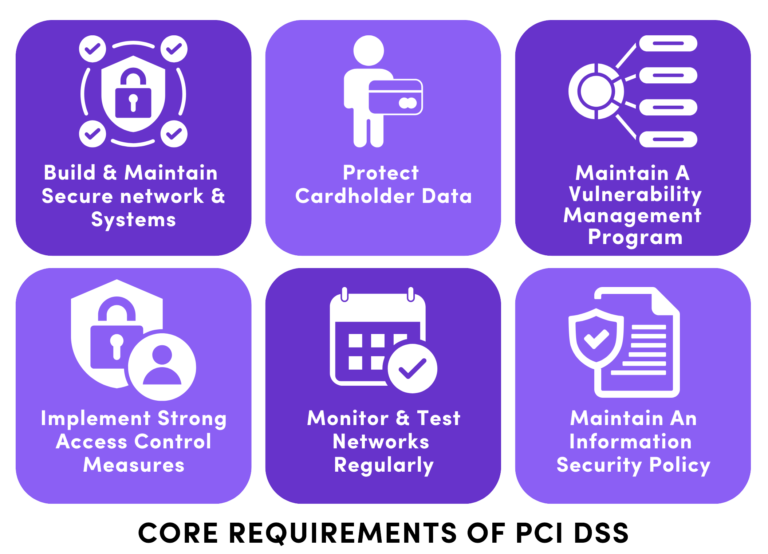
To achieve PCI DSS compliance, businesses must adhere to six primary control objectives, each with specific security requirements. These objectives focus on:
Let’s explore these controls and their associated 12 security requirements in detail.
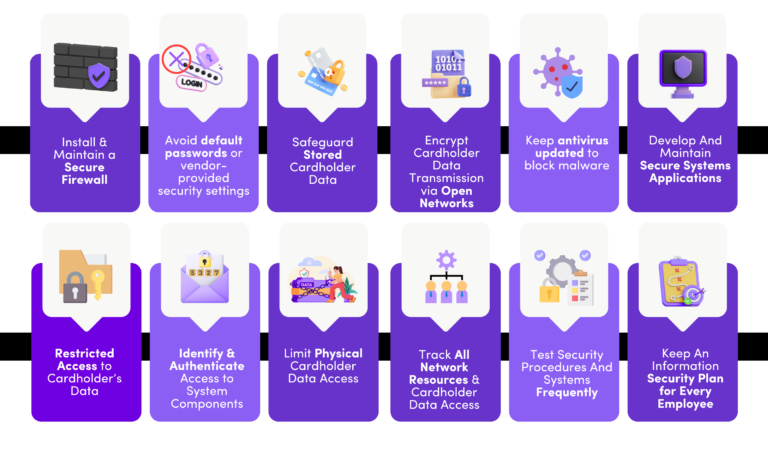
Now, we are going to discuss the 12 PCI DSS requirements explained.
Firewalls act as the first line of defense against cyberattacks by blocking unauthorized access to payment systems. Businesses must:
Cybercriminals often exploit default credentials to gain unauthorized system access. Therefore, organizations must:
Sensitive payment data must be encrypted to prevent unauthorized access. Key security practices include:
Payment data must be secured when transmitted over public networks. Organizations should:
Malware infections can compromise payment security. Businesses must:
Vulnerabilities in software can be exploited by attackers. Hence, responsible organizations must:
Only authorized personnel should access sensitive payment data. Businesses should:
Organizations must establish strict identity verification for users accessing payment systems. Best practices include:
Physical security is as important as digital security. Hence, businesses should the following steps for PCI DSS compliance:
Continuous monitoring ensures quick detection of security breaches. So, organizations should:
Routine security testing helps identify and fix vulnerabilities before attackers exploit them. Key measures include:
A strong security policy fosters a culture of compliance within an organization. Businesses must:
Hence, we can say that achieving the PCI DSS compliance checklist requires businesses to implement these 12 security requirements to ensure secure payment environments. These measures protect cardholder data, prevent fraud, and effectively enhance business credibility. Regular monitoring, employee training, and strict access controls are crucial for maintaining compliance.
By proactively securing payment systems, businesses can reduce cyber risks and build customer confidence. So, start implementing PCI DSS controls today to safeguard your financial transactions and business reputation.
Businesses must take proactive steps to maintain PCI DSS compliance. Key strategies include:
Hence, by implementing these measures, businesses can enhance data protection and avoid compliance risks.
PCI DSS controls are essential for protecting payment data and ensuring compliance. Businesses must implement these security measures to prevent data breaches, reduce financial risks, and enhance customer trust. Hence, understanding the critical 12 PCI DSS requirements and adopting proactive security strategies helps organizations maintain a secure payment environment.
Staying compliant requires continuous monitoring, employee training, and regular security assessments. Moreover, by adhering to PCI DSS certification and standards, businesses achieve regulatory compliance and strengthen their overall cybersecurity framework.
Therefore, consult the experts at Axipro to start implementing these controls today and safeguard your customers’ payment data effectively. We understand that you may face unique challenges while competing with other similar service providers. Hence, to stay ahead, we’ll help to match all the required compliance and certificates for long-term and hassle-free operations.
So, contact us for your specific business needs.
WhatsApp us